“The Retro Craze: Yesterday is Here!” by Andy Tallone

“The Retro Craze: Yesterday is Here!”

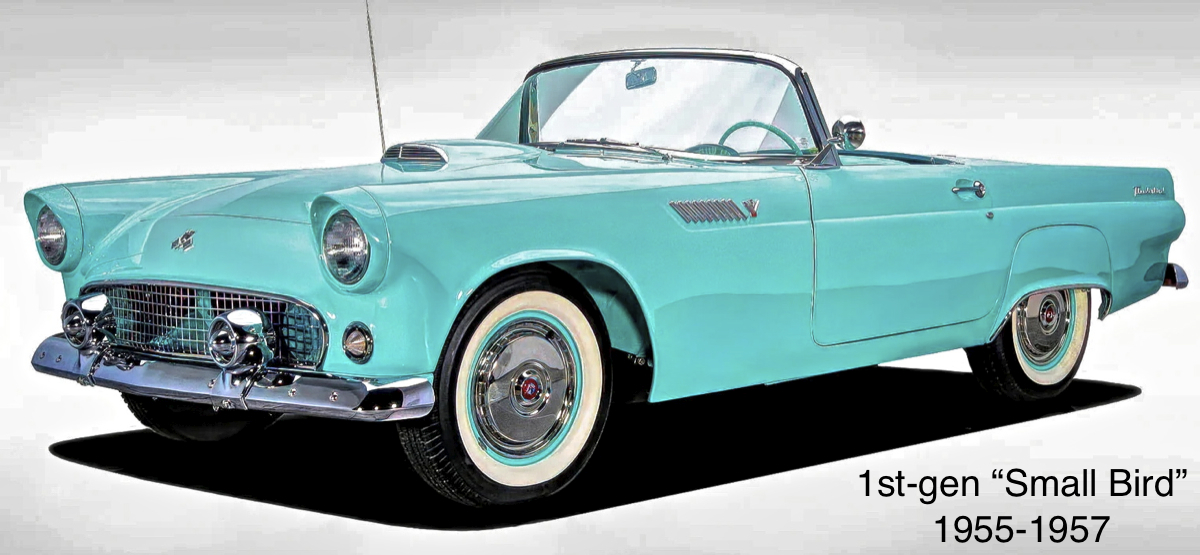
The automotive landscape is rich and diverse, with an exciting past full of some incredible cars. Some more incredible than others. In fact some stand out over time, and remain evergreen to this day. Cars like the 2-seat Thunderbirds ,1955-1957), 1940 Fords, the VW Beetle, the Shelby Cobra, the ’65 Mustang, the ’69 Camaro and the ’70 Dodge Challenger still live on in the minds of enthusiasts of all ages.

In 1993 Dodge was searching for relevance. They were selling only front-wheel drive cars, there were no Hemis yet and the Kenworth-inspired Ram pickup was still a year off. Chrysler’s top engine was the aging 360 ci LA small block. What to do? Tap into the past for inspiration. Not Dodge’s past, mind you, more like Ford’s. The Shelby Cobra of the early 1960s is so iconic that an entire industry has sprung up just to make copies of it. Dodge ended up creating a modern day Cobra in the Dodge Viper RT/10, and for power they took the 360 and added two more cylinders to it making it an 8.0-liter V10. It sounded like a leaf blower but boy was it fast. Initially it was quite primitive with no outside door handles, no roll-up windows and a lousy convertible top. Subsequent generations got more civilized, but not much. It never sold in big numbers, not even Corvette numbers. Around 1,000 to 2,000 per year were built in 5 generations, totaling around 32,000 cars over 26 model years. Not big numbers, but Dodge did it anyway. The retro Viper was never intended to sell en masse, it was more of a halo car. And as such, it excelled. Boys had posters of them in their rooms. It fostered a rabid fan base and its own racing series. 2017 was its last year.

Chrysler was on a tear in the early 90s. At the same time they released the Viper,Chrysler Design Chief John Herlitz and designer Tom Gale (who later penned the PT Cruiser) were working on a wild, unique ride they called the Plymouth Prowler. It was an open-top roadster meant to look like a 1930s car customized in the ‘50s. The front wheels were practically open, except for tiny motorcycle fenders. It was powered by the 3.5-liter V6 engine from the Dodge Intrepid, but the transaxle was moved to the rear end. It was an odd setup, and seems a strange choice. V8 power is a given in hot rods, the V6 must have hurt sales. The frame was revolutionary in its use of aluminum castings, extruded aluminum tubing, structural bonding (adhesives) and specialized welding techniques. It sounds expensive, and it was. The narrow 30’s-style nose required a wide, sturdy bumper which were a pair of outriggers, and are odd to look at and yet somehow work. The two-place roadster had a manual soft top and almost no storage, so Plymouth sold matching trailers to put your suitcases in. It was a crazy car, it’s hard to believe that Chrysler did it. But they sure did. They were practically hand assembled and were costly to build, they lost money on every one they sold. Was it worth it? It was released in 1997, and over its 6 model year life only 11,702 were sold. But it was never intended to be a big seller. It was a halo car for Plymouth that brought people into their showrooms.

Volkswagen, a company steeped in rich history was quick to reason that this warm feeling of nostalgia for the past could be tapped in the present to sell more cars. With that, they designed a new body for their Group A4 platform that underpinned the front wheel drive Golf, Jetta and Audi A3. The new body successfully copied the looks of the classic Beetle from the 1960s that everyone knew and loved. No, it wasn’t rear engine, no it wasn’t air cooled. Underneath, it was a regular front-drive car just like everything else they built. It was a brilliant idea, one of those that leaves everyone else scratching their heads and wondering why they didn’t think of it. And it worked. It helped that it was incredibly cute. Released in 1998 it hit 107,090 units in its first year. The next year 1998 was even better at 160,147 cars sold. But then, as is so often the case with trendy products, the newness wore off and by 2000, the sales numbers were dropping and they didn’t stop until the 1st-gen’s run ended in 2011. There was a 2nd-generation that launched in 2011 with a half-inch longer wheelbase and more powerful engines and it revived sales. That having been said, VW sold nearly 2 million New Beetles, so they did something right. And whatever that was, others in the industry wanted some. Chrysler was next and followed VW’s lead by redressing one of its humble front-wheel drive platforms. Chrysler’s PL platform underpinned all three divisions’ Neons and was lengthened for this new vehicle, named the PT Cruiser. Keeping all the Neon’s mechanicals kept costs down. But the style was totally new. The nose paid homage to 1930s and ’40s Fords and the body was like a classic panel delivery. It had an aggressive stance and loads of attitude. The name supposedly came from Panel Truck although this one had windows, and four doors. Despite its oddness, the looks of a bad-ass hot rod with a front-wheel drive 4-cylinder power train, and being a new type of vehicle that didn’t fit neatly into any prior category, they sold 137,809 of them the first year, 2001. But, as is so often the case, sales dropped steadily after that. By the time they cancelled it in 2011, it was down to just 4,000 units per year. Added up though, PT Cruiser sales totaled 1.4 million cars over 12 model years. There was a time when you saw them everywhere. Clearly a success for Chrysler.

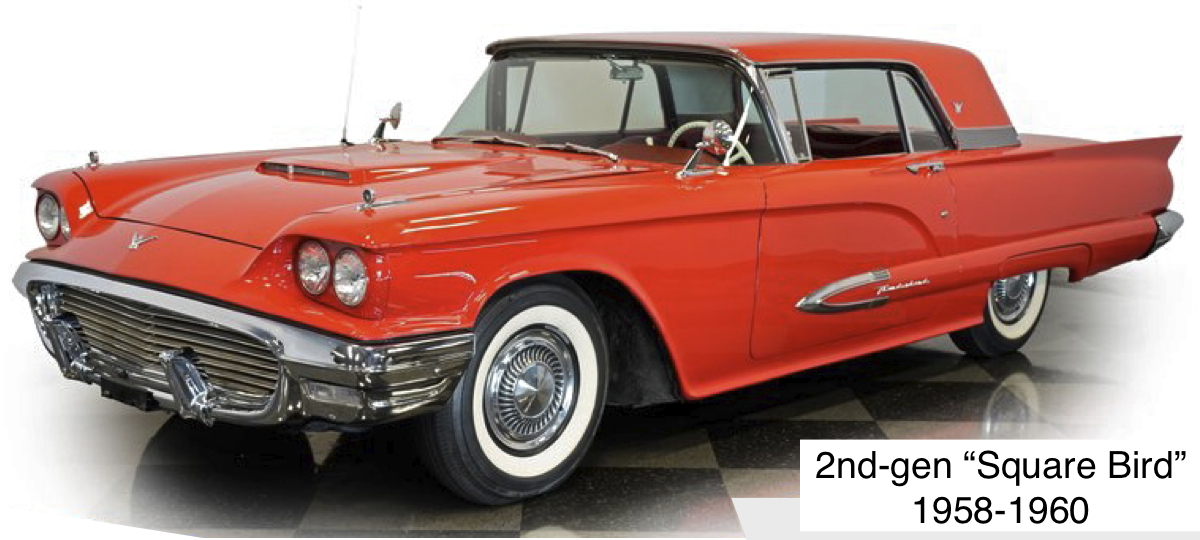
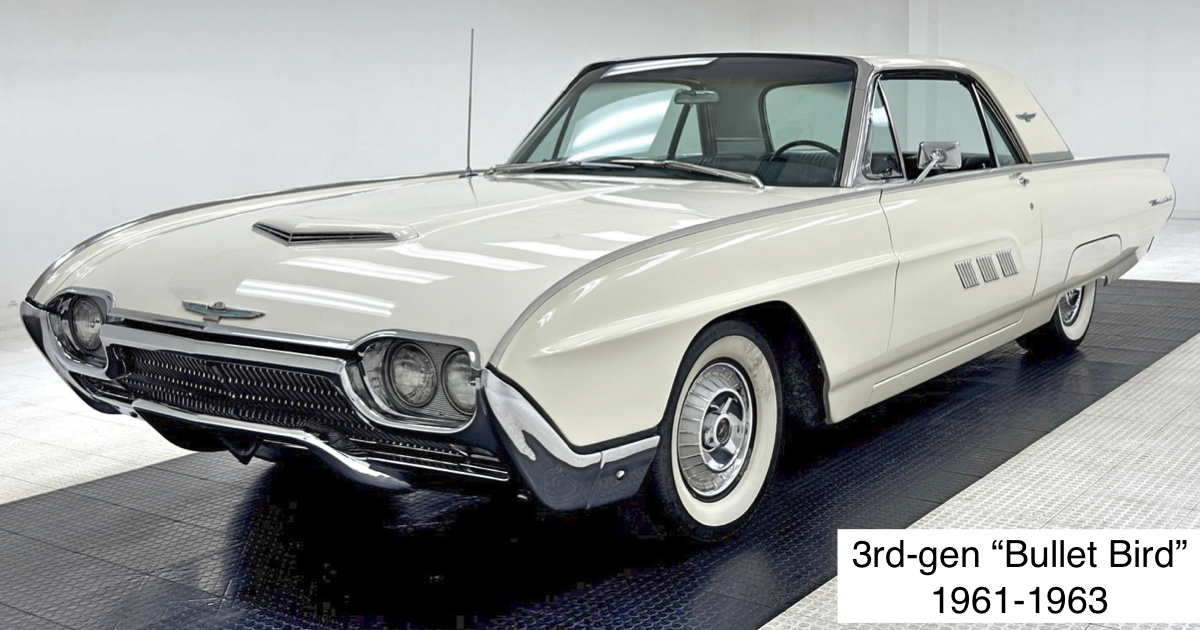
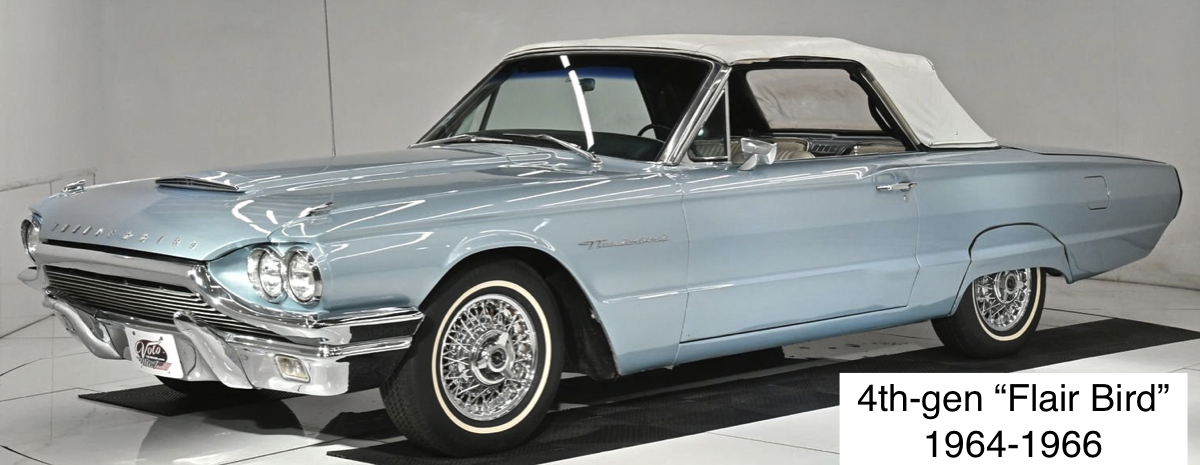
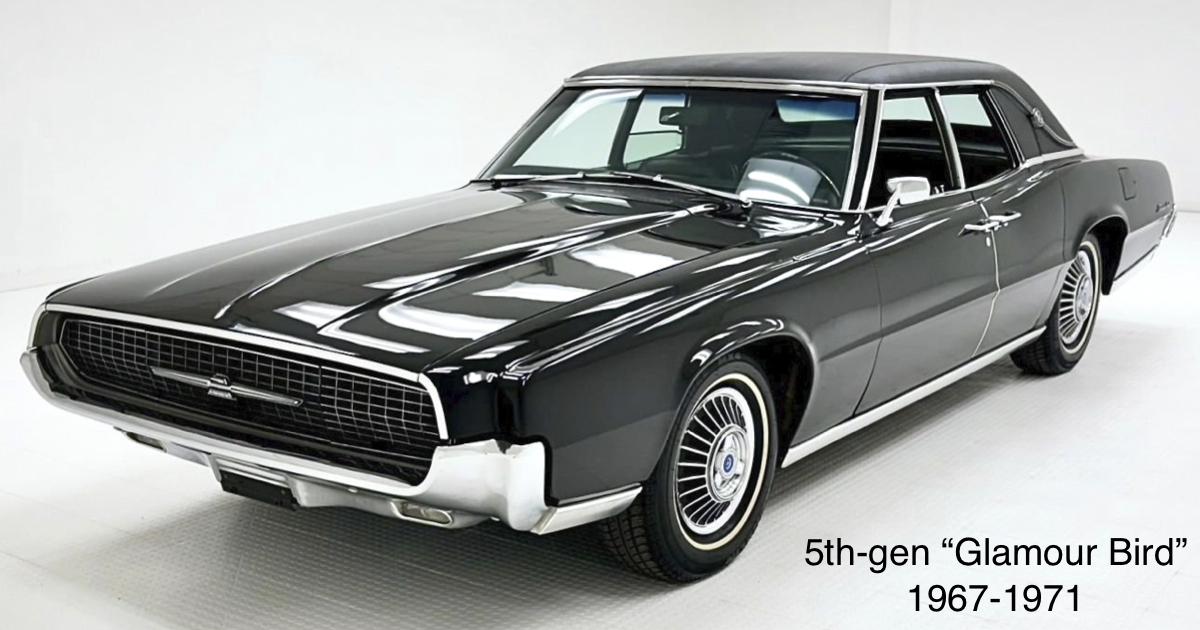
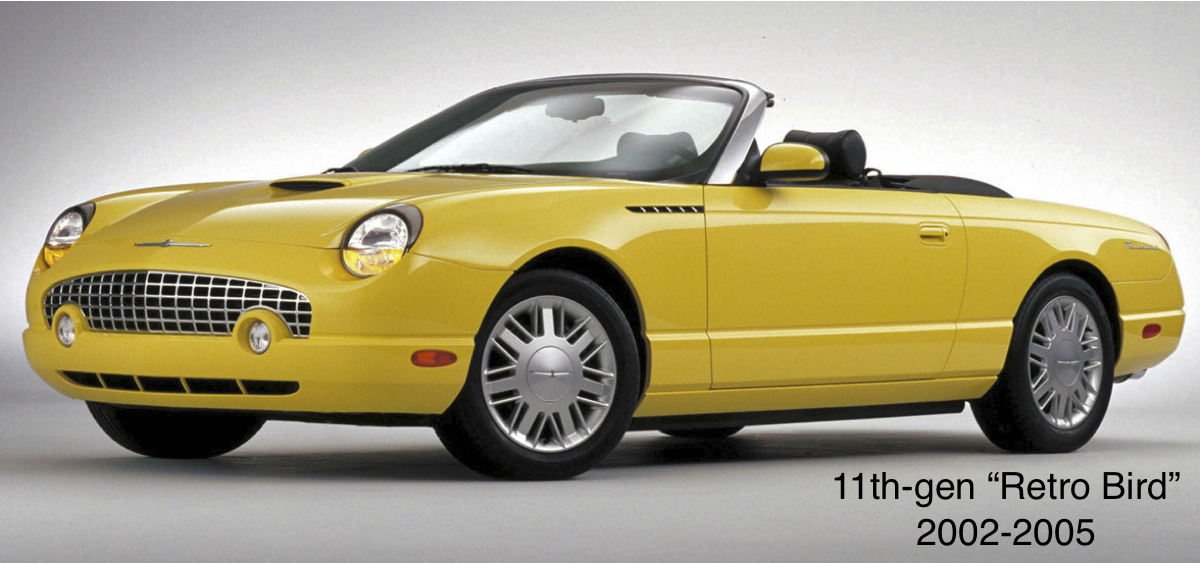
In 2002 Ford revived the Thunderbird, dormant since 1997, as the rebirth of the 2-seat ‘Birds of 1955-57. The new car was a marvelous modern day interpretation of the original, two seats complete with removable hardtop and that crazy porthole. It was a product of the fertile minds of Ford Design Chief J Mays, Designer Freeman Thomas and veteran Jack Telnack (who had been instrumental in the creation of the Fox-body Mustang), and it was never meant to be a hot rod. Like the original, it was more sophisticated, with adequate but understated performance. And like the original, the lack of power hurt sales. Built on Fords’ DEW98 platform, which also underpinned the Lincoln LS and Jaguar S-Type it was powered by a small 3.9-liter DOHC 32-valve V8 that was a destroked version of Jaguar’s AJ30/AJ35 engine architecture. At launch in 2002 the engine made 252 hp but received variable valve timing in 2003 boosting power to 280 hp. It was still not enough, not in an era where every car that Mercedes-Benz sold had more horsepower, all but one BMW, half of all Lexus’s (Lexi?). Even the Chevy Silverado pickup had more power than that. And of course, there’s that other thing. The same thing that killed the first 2-seat T-bird. Two seats. When they turned the Thunderbird into a 4-seat car in 1958, sales tripled. One has to wonder if that would have worked this time. The 2002 T-bird sold 31,368 units, in 2003 it dropped to 14,678, in 2004 just 12,757 and in 2005, its final year only 9,292 were sold. It’s a shame it didn’t do better. While we may bemoan Ford’s decision to use such a weak engine, they should be commended for having the guts to do something like this. It’s passion like this that brings us great cars, cars that never would have happened if it were up to the bean counters.

In 2003 Chevy launched the SSR (Super Sport Roadster), a highly-styled convertible pickup with a retractable hardtop, all styled to mimic the early 1950s Chevy trucks. The looks were stunning, the top worked great, they came with Corvette-derived engines with up to 395 hp, and they were totally, totally cool. They shared their GMT360 platform with the Chevy Trailblazer and GMC Envoy among others, so it was a solid truck. They got tons of attention at car shows, especially when demonstrating the retractable top, and they brought strong money at auction for awhile. They just didn’t sell that well. They sold less than 10,000 trucks in its maiden year of 2003 and sales declined from then until it was discontinued after selling only 4,000 units in the 2006 model year.

When Chevy saw all the fun Chrysler was having with the PT Cruiser, and seeing how easy it looked and how profitable it must have been, they couldn’t resist trying it themselves. The Chevy HHR (Heritage High Roof) is a funky retro panel delivery-styled front-wheel driver built on the Delta platform, shared with the Chevy Cobalt, Pontiac G5 and Saturn Ion. Whatever magic Chevy tried to capture from Chrysler must have worked. First year sales in 2006 were a 108,847, and 122,246 in 2007. But they declined after that, finishing at just 16,088 units in its final year, 2011. It didn’t help that it wasn’t as pretty as the PT Cruiser. The design just looked too contrived, like they were trying too hard. Some people thought they looked like a bread box or a toaster.

Styling in general is a delicate art. It’s easy to go too far, but it’s just as easy not to go far enough. And in the end, no matter what the designers think, it’s the buyers who have the final say, and you don’t hear from them until months or years after the design work is finished. Retro has been a successful theme in many of these cases, but it’s also not a guarantee of success.

In 2005 Ford introduced its 5th-generation of Mustang and it was totally and completely retro-styled. Fashioned to look like a modern day 1967 Mustang fastback, inside and out, it was well received with 160,975 sales in its first year. And every Mustang since, two more generations, have been styled to ape the looks of the classic 60s Mustang. Sales of the previous model were running around 130,00 sales per year, but the new retro-‘Stang sold 160,975 in its first year, a number that the Mustang hasn’t seen since. The simple, uncluttered beauty of the 2005 design proved to be timeless, Ford had done a great job of mimicking the past. It lasted until 2009 then in 2010 they reskinned it and it moved away from it’s classic roots somewhat.

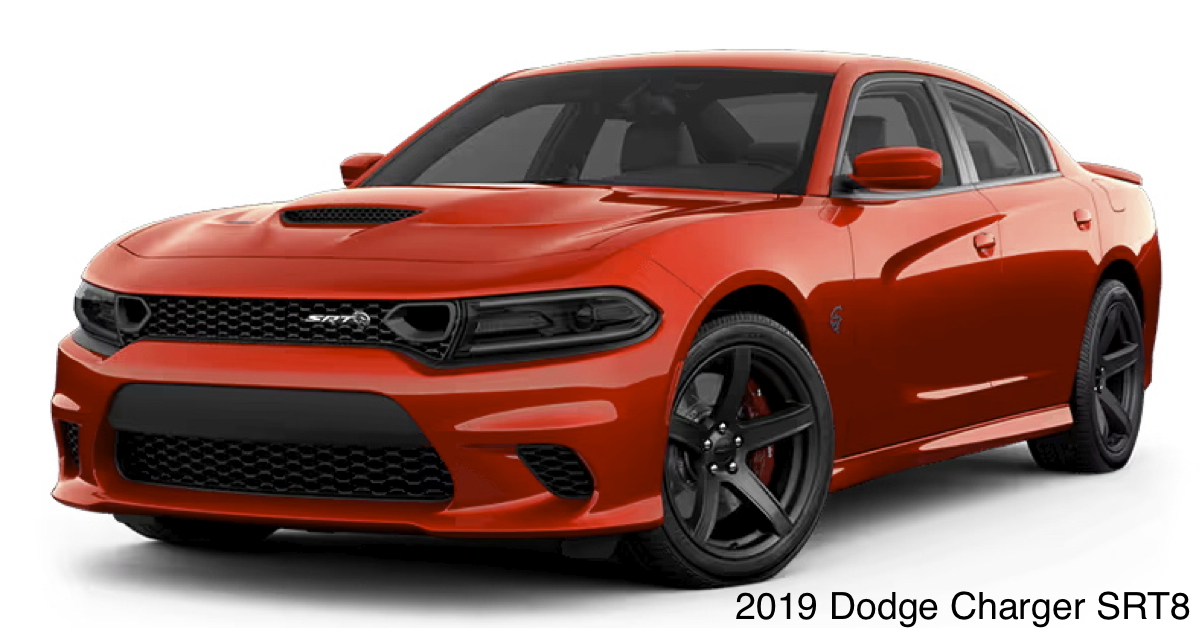
Dodge introduced the world to a new, modern-day Dodge Challenger in 2008. The new car did a great job of conveying the look of the classic 1970 Challenger it was inspired by. The last time Chrysler did an E-body (Challenger and Barracuda) it was built off of the 1960s B-body cowl (Dodge Coronet, Plymouth Belvedere) and despite being ‘midsize’ cars, they were big. This made the Challenger big, the biggest of the pony cars back then. Well, they did it again. The new 2008 Dodge Challenger was spun off of the same LX platform as all of Dodge’s other rear-wheel drive cars, the Magnum, Charger and the Chrysler 300. They were full-size cars by today’s standards which made the Challenger a big car again, and once again the biggest of the modern pony cars. Despite its size, Dodge really nailed the looks. It’s instantly recognizable as what it is. It’s a great-looking car from every angle and it fulfilled its mission perfectly. And it gave the Dodge Boys a chance to build some crazy-fast engines for it. In every year except the two following the 2008 housing crisis, sales have run between 40,000 and 70,000 units, every year until they killed it in 2023 model year, that is. That’s 16 model years without a generational change. Who else can say that? That’s a long time for a car and yet it was still selling well when the geniuses at Stellantis killed it.

GM was getting left behind in these modern-day pony car wars. So in 2010, after an 8- year hiatus, the new 5th-generation Chevy Camaro was released to the public. It was a total retro design aping the looks of the legendary 1969 Camaro. It was a good choice, however they relied on a young designer to work out the looks and some think he was too young to fully appreciate what the Camaro was all about. The result seemed overdone, like they tried too hard. Some people thought it looked exaggerated or ‘cartoony’. The windows were pushed high up on the body, leaving narrow slits to look through. Built on the Zeta platform, shared with the Holden Commodore it was heavy, over 4,000 pounds. But they gave it plenty of horsepower to overcome its mass. The SS (Super Sport) variant got the LS3 making 426 hp and the Z/28 got the 7.0-liter LS7 with 505 hp and it got even better later. They sold 81,299 cars in its first year. So the customers must have liked it. It’s appearance in the movie “Transformers” in 2007 had people panting for its release. Yet many critics feel it was the worst of the three revived pony cars. But it sold well enough to continue it for two more generations, now in its 7th.

The Retro Craze ended around this time. No more notable examples were built after that except maybe the Mini and the Fiat 500, and of course the continuation of the Mustang and Camaro into additional generations that maintain the retro theme. And the Challenger ran 16 years unchanged (that must be some kind of record).

Retro styling was a trend that really had some legs. Lots of cars were sold as the result, and nostalgic car fans got a real treat in this crop of great cars. Maybe it stirred up memories of the past for some of them, or maybe they just liked great-looking cars that turned heads and said something about the person driving them. That’s the way cars used to be, you know. Perhaps the world was harkening back to the simpler days of the past.

Motorsports News – 5/19/26 by David Vodden

Motorsports News by David Vodden

In America and around the world an auto race that began in 1911 will roar to life again this weekend for the 110th time on the hallowed ground of the Indianapolis Motor Speedway. The Indy 500 is the most prestigious race in the world. From its earliest beginnings at the time of the development of the automobile, to May 24, 2026, what happens on the two and a half-mile, square course stands alone in the world of sport. Thirty-two men and one British lady will traverse the course for two hundred laps seeking to place their name in history as the winner of the greatest spectacle in racing. So far there have been seventy-six different winners of the race. In that same time forty-two drivers have died seeking mortality as a 500 Champion. The last fatality occurred in 1996, thirty years ago, when Scott Brayton crashed in a practice run. Twenty-five drivers have won the race more than once with A. J. Foyt, Rick Mears, Al Unser Sr., and Helio Castroneves, each winning four times. Castroneves could become the only five-time winner this year. Three-time winners include Louis Meyer, Wilbur Shaw, Mauri Rose, Bobby Unser, Johnny Rutherford and Dario Franchitti. The list of two-time winners includes eleven drivers. There are nine past winners in this year’s race including Castroneves, Josef Newgarden, Takuma Sato, Scott Dixon, Ryan Hunter Reay, Alexander Rossi, Will Power, Marcus Ericsson, and Alex Palou. Twenty-one drivers who were not born in America have won the race with four each from France and Brazil. The magnitude of the event can be measured by the sell-out in seats for this year’s race at 275,000. Another 76,000 fans will attend the event in the infield. Lasty, year over seven million watched the event on television or some other broadcast medium. Rewatching the event multiples the eyes on the show many times over. You can see this year’s race on FOX network television at 9:45 am Sunday May 24th. PST.

A late race developing story line of some magnitude involves British female racer Kathyrn Legge. Legge will attempt to complete eleven hundred miles of racing Sunday by first racing the Indy 500 and then flying to Charlotte where she will race in the 600-mile NASCAR CUP race there. This is an amazing feat, to say the least. To be fair, unlike Kyle Larson who tried this double race twice unsuccessfully, Legge’s entry is not about winning but finishing. Both her Indy car and her NASCAR Cup entry cannot score a win [Odds are the basis of this statement] Even so, the attempt is worth following and any level of success defined as finishing one or both events, including even starting both events, is a significant sports achievement for a forty-five-year-old female racer. Her sponsor, E. I. F, which stands for Eyes, Lips, Face cosmetics, is footing the bill which must be huge. To be fair, Legge has run four Indy 500 races. She has raced at LeMans and won in the Toyota Atlanta series in her earlier years. She is a racer, for real. It would be a great story if she makes any level of this adventure a win in any form. Good luck Kathyrn Legge!

For the first time in decades the Sunday race weekend that celebrates our Memorial holiday will not include the Formula One Grand Prix in Monaco. For crazy people like me that Sunday started before dawn in Monaco and ended late in the day in Charlotte North Carolina. This year we all get to sleep in until seven am when the pre-race show starts for the Indy 500.

Enjoy the 500 and the NASCAR 600. Don’t forget the local race scene where auto races occur all around us as part of the big American race weekend.

“3rd-Generation Camaros & Firebirds” by Andy Tallone

“3rd-Generation Camaros & Firebirds”

By the time Chevy retired the 2nd-generation F-body twins (Chevy Camaro and Pontiac Firebird) in 1981, they’d been in service since 1970. 12 models years is an eternity in the car business and the 2nd generation was well past long-in-the-tooth. Technology had moved considerably since the 1960s when the 2nd-gen cars were designed. And government-mandated fuel economy standards were becoming more demanding every year. The F-bodies had gotten bloated over the years and the playing field had also changed. Ford launched its new 3rd-generation Mustang on the Fox-body platform in 1979, and gone were the easy pickings provided by the Pintobased Mustang II that came before it. The new Fox Mustang handled well and was light enough to be fast even with the crappy engines back then. It was time for a change.

Even before the new Mustang launched, Chevy saw it coming and by 1977 work had begun on the next F-body. Even though there would be no commonality between the 2nd-gen’s F-body platform and that of the 3rd-gen it was decided they would name the new platform the F-body. By 1979 full-size clay models were being sculpted and hardcore engineering began. Wind tunnel and durability testing commenced in 1980. The result of all the wind tunnel work was a move away from the long-hood/short-deck look of the 2nd-generation to more of a wedge-shaped, aerodynamic profile. Production began in August 1981 at the Norwood, Ohio and Van Nuys, California plants and the first 1982 Camaros and Firebirds were delivered in September 1981.

The new cars were smaller overall. Where the prior two generations had 108-inch wheelbases, the 3rd-gen’s was 101”. Weight was down too, by nearly 500 pounds. This improved performance, handling, braking and most importantly fuel economy. Important to the government, anyway. The new shape netted dramatic improvements in the drag coefficient, dropping from .48 to .37 Cd, again benefitting fuel economy. This was a true fully monocoqued unibody and it was not only lighter but much stiffer than before, designed by computer and made of high-strength steel. The suspension was all new front and back. Gone were the old leaf springs replaced by a novel coil spring setup with two trailing arms, a pan hard rod and a torque arm mounted to the transmission. Gone too was the old recirculating ball steering box replaced by modern rack-and-pinion.

The sharp, angular lines and large flat surfaces were a complete departure from previous Camaros and Firebirds and was brilliantly executed. They were handsome cars when they came out and they still turn heads today. When it came to the exterior, the two sisters shared only the roof, windows, doors and windshield in common, everything else was unique to each car. Chevy opted for four rectangular seal beams tucked into coves in the nose. Pontiac elected to go with hideaway headlights very much like the Corvette’s, a first for the Firebird. Each had their own wheels. Of course under the skin most of it was the same. And for the first time, when it came to engines there was no differentiation between brands, both the Chevy Camaro and the Pontiac Firebird would have Chevy engines. It just wasn’t cost effective to produce two completely separate engine families to do the same job and compete against one another. It was a smart move. The Pontiac V8 engine family was getting long in the tooth anyway, in service since 1955.

The base Camaro and Firebird came standard with, believe it or not a horrible old 4- cylinder known as “The Iron Duke” wheezing out 90 hp from 1982-1986. It was followed by the almost as awful little 2.8-liter OHV V6 making 135 hp. It was an underpowered, grumbly little thing that was punched out to 3.1 liters in 1991. Of course all we care about are V8s. The generation started out in 1982 with two V8 choices. The LG4 was a 305 ci 4-barrel with 145 hp and the top engine was the L69, a 305 with “CrossFire Injection” making 165 hp. The latter was used on the Corvette, but with a 350 (5.7). It was essentially two throttle body injectors (TBI) on a cross-ram manifold. They looked awesome but didn’t make much power and were prone to drivability issues.

In 1985 Tuned Port Injection (TPI) arrived and it transformed the lowly 305. Horsepower jumped to 215 hp, drivability and most important to the corporate suits, fuel economy improved. TPI too was a great-looking system that made the engine look futuristic with its ‘bundle of snakes’ intake runners. At this point one could order any Camaro or Firebird of their choice with either a 5-speed manual or a 4-speed automatic. In 1987, for the first time a version of the 5.7 (350 ci) with TPI became available. These were almost a Corvette engine. The ‘Vette’s engine had aluminum heads and these had iron heads, but otherwise they were pretty close and made comparable power…if you ordered the right package.

The Achilles heal of the 3rd-gen F-bodies is that they’re so low to the ground that there isn’t a lot of room for exhaust plumbing. That’s why there was never a true dual exhaust system on any 3rd-gen F-body. They were all 2-into-1-into 2 setups. The two sides joined in a “Y” next to the rear of the engine on the passenger side, then they went through a cat next to the tranny, then a single pipe snaked its way down the driveshaft tunnel and over the rear axle, to a sideways muffler behind the axle. One pipe went in one side and two pipes came out, one on each side, that exited the back corners of the car. It was a restrictive system to say the least and it choked off the power. In standard form this rendered the 5.7 to making 230 hp. However, if you checked off the G92 package on the order sheet, you got a dual-cat exhaust system that still followed the same 2-into-1-into-2 path but flowed much better. With it, the 5.7 made 245 hp, the exact same output as the Corvette that year.

GM didn’t have a 5-speed manual transmission in their system that could handle the torque of the 5.7, so it was automatic-only. If you wanted a 5-speed you had to opt for the 5.0. At this point, there were two 305’s (5.0-liter), the LG4 with 4-barrel carb and making 150 hp and the LB9 with TPI making 215 hp. Then there was the L98 5.7 TPI making up to 245hp. This was the last year for carburetors. Starting in 1988 everything was fuel injected. TPI stayed the same on both the 5.0 and 5.7, but the carbureted base V8 was replaced by the LB8, a 5.0 with TBI (Throttle Body Injection) making 170 hp.

The Z/28 was the Camaro’s high-performance package right from the start and the Trans Am was Firebird’s. Both came with the same engine and transmission choices, and TPI V8s were only available on these models. Everything else got a V6 or the TBI 305.

The Z/28 package included a TBI 305 as standard (but had the option to go with TPI on a 5.0 or, from 1987 on, a 5.7), heavy duty suspension, bigger brakes, rear spoiler, special hood with faux louvered scoops, sport gauges, emblems, stripes, etc. The Trans Am was mechanically almost identical with some subtle difference in suspension and steering tuning. Chevy called their handling package 1LE and Pontiac called theirs WS6. As a general rule Pontiac lived up to its corporate position, one notch above Chevrolet. Their interiors were nicer, with richer fabrics and carpeting, with soft plastic shift knobs instead of hard plastic on the Chevy. The Firebird’s ashtray glided open on dampers while the Camaro ashtray snapped open like it was going to break off in your hand. The Firebird enjoyed the extravagance of hideaway headlights. Can you imagine how much that must have cost? Just to one-up Chevy?

In 1985 the Z/28 was selected to be the standard car for the IROC racing series. The International Race of Champions pits top drivers against one another in identical cars so that it becomes a battle of pure skill. So, Chevy made IROC-Zs an option on top of the 1985 and 1986 Z/28s. It added 16-inch IROC wheels, special suspension bits and IROC-Z graphics to the already well-equipped Z/28. So, during these two years you could order a Z/28 that was not an IROC. Or you could go with the Z/28 IROC-Zs and had both Z-28 emblems and IROC-Z decals on the doors. Starting in 1987, the Z/28 name was dropped and there were only IROC-Zs. 1987 was also the first year for the 5.7 and the first year for the convertible. There hadn’t been a convertible since 1969. The IROC series switched cars in 1990 and started using Dodge Daytonas so the IROC-Z went away and the Z/28 returned in 1991 and 1992.

Also in 1985, Pontiac launched their own special model. The GTA was intended to be a high-end luxo model of the Trans Am, sort of like the GTX was to the Road Runner. It came standard with the 5.7 TPI and had a premium interior with rich fabrics and leather in all the right places. The seats were fully articulated. They continued the GTA through the end of the 3rd-generation in 1992.

Airbags came in 1990, but only for the driver. Passenger-side bags would have to wait until Gen 4. In 1991 both sisters got a facelift. The Camaro’s consisted of a new ground effects apron with bigger front air dam and faux brake cooling scoops in front of each wheel. This was on all ’91-92 Camaros, not just Z/28s. IROCs had always gotten their own 16” IROC rims, but those were gone now. In their place was the 16” 25th Anniversary rim, to commemorate 25 years of Camaros. Technically that would have been 1992 only, but the ’91 got the wheels. All 1992 Camaros were called 25th Anniversary Editions, however there was an optional appearance package called the Heritage Package that included, among other things the new 16” 25th Anniversary wheels. However, they’d already been released in ’91 across the entire Camaro line, which now consisted of the RS and the Z/28.

Also in 1991, the Trans Am got an all new nose and a new look. It was sort of a love-itor- hate-it affair. I personally didn’t think it improved the looks. It was sort of snarky. Sales started out pretty strong in the first half of the 3rd-generation, averaging over 195,000 Camaros per year and 105,000 Firebirds. But by 1992 that number had fallen to 70,712 Camaros and 27,567 Firebirds.

The 4th-generation was right around the corner but wouldn’t offer much relief. The world was changing and the market that drove this segment just wasn’t there anymore, not like it once was, at least. The Baby Boomers who had been the core of their market in the beginning had grown older and more affluent, and were raising families. Minivans and SUVs gained in popularity during these years, and the F-bodies paid the price.

“Chevy’s Mark IV Big Block” by Andy Tallone

“Chevy’s Mark IV Big Block”

Chevrolet introduced their first modern V8 (they made a V8 back in 1917-1918) in 1955. Of course, we all know how that went. The Chevy Small Block V8, as it came to be called, started out as a humble 265 and grew all the way to 400 ci. It was and is one of the most successful and prolific car engines ever made, having powered nearly everything Chevy and later GM made for seven decades. 93 million were built (not including the modern LT- or LS-series)! 93 million small blocks. That’s one helluva record!

Starting out in 1955 with 265 cubic inches, it made 225 hp tops. Once the bugs were sorted out of the new design, it was quickly expanded to 283 ci in 1957 and horsepower also grew. Even fuel injection was added, a radical move for 1957, which stood out even more because it fostered the first American engine to make one horsepower-per-cubic inch of displacement, 283 hp from the 283 Fuelie. That was impressive. But by 1958, they’d slapped dual 4-barrels on it and made 290 hp.

But it wasn’t enough. Chrysler’s Hemi’s passed the 300 hp-mark long ago and now Ford’s new FE big block engine family arrived in 1958 with a 352 ci V8 making 300 hp and gobs more torque. The fun was over. While they could continually enlarge the small block, they needed a heavy duty big block like Ford and Chrysler, with strong internals and an advanced design.

Enter the W-series in 1958. Starting out as a 348 ci, it too was quickly blown out to 409 ci and became a legendary performance engine in its time. The Beach Boys even did a song about it in 1962. This was Chevy’s first attempt at a big block and it was successful to a point. But it’s limitations were quickly discovered. Strangely, Chevy had decided to machine the deck surface of the block (where the heads bolt to) at an angle, not square with the bore. This, combined with an oddly-shaped combustion chamber and piston crown was supposed to improve flow, cylinder-filling, and fuel burning. It was an interesting experiment and a bold move on Chevy’s part, but it had more flaws than advantages and probably stayed too long.

It was a great engine for Chevy’s full-size passenger car line and their trucks in milder form, and in the early 1960s its performance was considered exceptional. But, it was quickly being eclipsed by its competitors. They’d learned a lot of lessons with the Wseries, that could be applied to a whole new engine, a clean-sheet design.

By 1962, design work had started led by Chevy’s Chief Engineer, Bill Fisher, with heavy input from Zora Arkus-Duntov, the legend, and the Corvette Chief Engineer. Fisher wanted a great street engine that could easily be scaled up as needed, an advanced design that would be easy to produce, and Duntov wanted the Corvette to dominate racing and the street scene. The new engine made it’s debut at Daytona in 1963, dubbed “the Mystery Motor” because no one knew what it was. They were expecting the W-series 409. This new engine was unstoppable.

By 1964 early prototypes were enduring extensive dyno work and durability testing. And by mid-year 1965 they released the first Mark IV big block, the 396. Available in a wide variety of Chevrolets, the midsize Chevelle/Malibu, the full-size Impala line, Chevy Trucks, and the Corvette, the new 396 came in 3 flavors: The L35 with hydraulic lifters and a 10.25:1 compression ratio good for 325 hp; the L37 also with hydraulic lifters but a much hotter cam and making 375 hp (but was only available in the Chevelle SS396); and the L78 with solid lifters and a red-hot cam, rectangular-port heads and an 11.00:1 compression ratio with a whopping 425 hp!

This bold new design shared nothing with the W-series that came before it except its 4.84” bore spacing. It was designed from the start to be a heavily oversquare (big bore, short stroke, relatively speaking), large displacement, super-strong, expandable architecture. The tall deck height allowed for increases in stroke and the wide bore spacing left plenty of room for increases in bore. But the key to performance always comes down to breathing, and this massive engine would need lots of it. The heads are a masterpiece of flow optimization. The massive, heavy cast iron heads had huge intake and exhaust ports with straight paths in and out, and the large valves were arranged in the absolute best position to maximize efficiency. That placed the valves oblique to one another, not parallel on any plane. The intake valves point one way and the exhaust valves point in a completely different direction. They’re not far off from one another, but the difference is quite obvious. They’re called “porcupine heads”, and they were harder to produce than small block heads with all their valves lined up straight. But the added cost and complexity was worth it, because the new big block breathed and performed brilliantly, with enough room to expand by every measure.

And expand they did. In 1966 a new, larger version of the Mark IV big block was introduced with 427 ci, an engine that eclipsed anything that Ford had certainly, and even rivaled the mighty 426 Hemi. The 427 dominated racing from 1967 through 1970. The standard version (L36) had a single 4-barrel and made 390 hp. The L72 had solid lifters and a Tri-Power setup (three 2-barrel carbs) and made 425 hp, and these were the street motors. Chevy also built two wicked race motors rarely seen on the streets, although super-rare examples do exist.

The 1967-1969 L88 (RPO L88) used large rectangular-port heads, a 12.5:1 compression ratio, a radical solid-lifter cam, an 850 cfm Holley with no air cleaner, high-flow exhaust manifolds and 4-bolt mains all built on a special high nickel-iron their advertised horsepower was 430, but it was more like 550+ in the real world.

The 1969-only ZL1 (RPO ZL1) used an all-aluminum block and heads, cutting over 150 pounds, an even more aggressive solid-lifter cam, special lightweight pistons and rods, and dry-sump oiling. Otherwise it was the same internally as the L88. Chevy stated the horsepower at 430, the same as the L88, but in fact it was above 600.

Both engines are incredibly rare, having been made expressly for racing and never intended for street use. However, wily Chevy dealers back then figured out how to game the system by plugging the right option codes into the COPO (Central Office Production Order) system. They could get Novas, Chevelles and Camaros with 427s, including these crazy racing engines. Chevy went along with this because SCCA and NHRA rules required that a certain number be sold to the public for homologation.

Cars from Baldwin Motion and Yenko were sold new with financing and factory warranties. Most were intended for racing, but some made it onto the street. Among the rarest is the 1969 ZL1 COPO Camaro with the all-aluminum 427, just 69 were built. Today a genuine Yenko of any kind brings top money at auction.

1970 was a big year, many things seemed to turn on it. In 1970, GM dropped it’s decade-long ban on engines larger than 400 ci in their midsize cars. In 1970, the 396 got bumped to 402 ci with a slight increase in bore, but Chevy continued to call it a 396. And in 1970, the 427 got punched out to 454. The standard 454 (LS5) had a hydraulic cam and 10.25:1 compression, made 365 hp and was a $295 option. The top engine costs four times as much, at $1,221, but boy was it worth it!

Not including race car motors like the L88 or ZL1, the ultimate Chevy big block had to be the 1970 454 ci LS6. It was strong with 4-bolt mains, forged steel crank and rods, forged alloy pistons. It breathed well, with rectangular-port ‘open chamber’ heads (casting #3994028), 2.19” intake valves and 1.88” exhausts, an aluminum low-rise dual-plane intake manifold mounting a single Holley 4150 800 cfm 4-barrel carburetor with mechanical secondaries. And it made big power with an 11.25:1 compression ratio and a radical solid-lifter cam. Chevy claimed they made 450 hp at 5,600 rpm and 500 lb-ft of torque at 3,600 rpm. Big numbers to be sure, bigger even than those claimed by Chrysler for their much-vaunted 426 Hemi. But they were all unnaturally low. Most experts agree that the 1970 LS6 made well north of 500 hp at higher rpms than 5,600. Chevy didn’t want to alarm the insurance companies with such lofty claims, so they simply cut off their dyno tests at 5,600 rpm. But bigger power awaited up around 6,500.

Funny thing, though. This ultimate big block, this top dog muscle car motor, the pinnacle of V8 technology at the time was only available in the 1970 Chevelle SS454. Not Chevy’s full-size cars, and not even the Corvette. That’s unusual since Chevy always reserved its best performance engines for the Corvette first. But, for 1970 the only big block option for the Corvette was the LS5 454 which made 365 hp. The LS6 wouldn’t come to Corvette until 1971 but by then increasing smog regs dropped output to 425 hp. Only 188 were built.

1970 was the last good year, then the Malaise hit in 1971. The combination of all the new smog, gas mileage and safety regulations, the removal of lead from the gasoline and rising insurance costs was killing performance. GM went on a wholesale campaign to neuter all its engines in an effort to meet the new standards.

Big block options became limited, compression ratios fell, cams became milder, carburetors got smaller, tuning was dialed back and endless new gadgets began appearing on these already-choked off engines. And horsepower ratings dropped dramatically and continued to drop for years.

The last year for an optional big block was 1972 in Corvette, Camaro and Chevelle. The last year for Chevy’s full-size cars was 1976, by that time down to just 225 hp. From then on the Mark IV 454 big block soldiered on in Chevy and GMC trucks and SUVs through the first half of the 1991 model year.

That’s when the next generation of big blocks came out. The new Mark V was known as the Vortec 7400 and alongside Chevy’s venerable small block, and some 6-cylinders powered every full-size truck and SUV that GM made, until 1999. In 2000 Chevy punched its mighty big block out one more time to 496 ci, making it the Mark VI and named it the Vortec 8100. This 761-pound monster powered many of GM’s biggest trucks through 2010. From then on it was LS or diesel all the way. Well, until lately, now they’re putting turbo 4-cylinders in full-size trucks. It’s a travesty.

It would seem that the age of the big block has come and gone. None remain. Chrysler’s B and RB engine families (383, 413, 426, 440) died in 1972. Ford’s FE big block (352, 390, 427, 428) was gone by 1970, replaced by the 385-series big block (429, 460), itself gone by 1978 in cars and 1997 in trucks. Today’s modern V8s, Ford’s Coyote, Chrysler’s Gen 3 Hemi and GM’s LS/LT-series can make all the power and torque of the classic big blocks with less displacement, better fuel economy, cleaner emissions and 300 pounds less weight.

But Chevy’s amazing Mark IV big block lives on in racing of many different types. It’s still the most favored engine in drag racing (Hemi fans may argue this). And it’s very strong in the classic and custom car world. Classic Chevelles, Impalas, Camaros and Corvettes with big blocks from the factory get all the attention at shows and command top dollar in auction.

If you look at the lifespans of America’s other big blocks, the Chevrolet Mark IV has had the longest life, by far. Chevy’s own W-series lived from 1958 to 1965 (8 years). Ford’s FE big block lasted from 1958 to 1970 for cars and 1976 for trucks (19 years). Chrysler’s B and RB big blocks were around from 1959 through 1978 (20 years). Ford’s 385-series big block, the 429 and 460 went from 1968 through 1997 (30 years). Chevy’s big block was produced from 1965 through 2010 (46 years). No else even comes close. That’s how good an engine it was and is, what a great design it had from the start. And it’s still revered to this day.

For being billed as GM’s ‘bargain-priced brand’, the lowest in it’s ascending ladder of brands, Chevrolet really took the lead in performance, and not just at GM, but out there on the street. And up against some daunting competition from Chrysler and Ford, both strong on engineering. Chevrolet gambled with the Corvette, then stuck with it when it struggled, and endured low sales volumes because they knew it was important. Important to the Chevrolet brand and important to the world at large. Corvette is something special. It always has been. And as far as engines go, Chevy’s Mark IV big block is also something special. Powerful, indestructible, beautiful (if you can call a brute like that ‘beautiful’), truly one of the world’s great engines.

So good in fact that 15 years after they went missing in new cars and trucks, Chevrolet still sells big blocks as crate motors. And talk about expandable, you can buy brand new big blocks in sizes 427 ci, 454 ci, 502 ci, 572 ci and 632 ci. 632 cubic inches? From Chevy?! Holy cow!

So, why call it a Mark IV? The W-series 409 was considered the Mark I. The Mystery Motor that first appeared at Daytona in 1963 was the Mark II. The Mark III was a 1963 design study that would have changed bore centers, but was never produced. When the new engine went into production in 1965 it was called Mark IV. And what an engine!
“Detroit’s Big 3 in World War II” by Andy Tallone

“Detroit’s Big 3 in World War II”

This 1943 Jeep was one of 647,925 built by Ford during the War. Willys came in second with 363,000.

The country, the world, the economy and the auto industry suffered a crushing blow following the great stock market crash of 1929. Sales and been rising steadily until then. Chevrolet went from 146,243 cars sold in 1920 to 1.5 million by 1929. Ford went from 806,040 cars in 1920 to 1.5 million also by 1929. The crash happened late in the year, October, and the effects were almost immediate. Car sales dropped across the board, and the smaller, weaker brands fell by the wayside. By 1932, Chevy was down to 400,000 cars and Ford just 300,000.

But slowly the economy recovered and so did the auto industry. By 1941, Chevy was back making 1.1 million cars and Ford an even million. Times were starting to look good again. There was a war raging in Europe but President Roosevelt had run for reelection on the promise of keeping America out of the war. Then Japan attacked Pearl Harbor at the end of 1941, December 6th, thrusting us headlong into the war.

America was weak from a military standpoint, with just 458,000 men in uniform, armed with World War I-vintage arms and equipment. The Germans were racing across Europe in modern tanks and crushing everything in their path. The Japanese had more aircraft carriers in the Pacific than we did and they just knocked out most of our battleships. America had been caught flat-footed but we had several key advantages that the bad guys didn’t have. First off, we were huge and rich in agriculture, minerals and people. Second we were isolated from both conflicts by vast oceans. And lastly we had a huge industrial base, the biggest in the world, and we knew how to make stuff, refrigerators, radios, washing machines, and cars, lots and lots of cars.

The government didn’t waste any time. On January 16, 1942, just 40 days after the Pearl Harbor attack, the president created the War Production Board (WPB) to control industrial production and convert civilian manufacturing over to the war effort. Donald Nelson was in charge. On February 2, 1942 the WPB ordered all civilian passenger car and light truck production to be halted. As the result, there are very few 1942 model cars and there wouldn’t be any until 1946. The legal authority for such a bold move came from the Wars Powers Act of 1941. WPB controlled all manufacture and raw materials.

The government didn’t take over, or nationalize the companies. They remained privately owned, but now with lucrative contracts from the government for mountains of stuff. Planes, tanks, trucks, boats, ships, guns, jeeps, ammunition, food, clothing, you name it.

Ford built over 80,000 Pratt & Whiney R-1830 Twin Wasp airplane engines.
This one is powering a C47B Skytrain transport.

Ford, for instance, went from making cars to building the B-24 Liberator bomber in their Willow Run plant, with a total production of 8,685 planes plus another 1,000-or-so knock-down kits shipped elsewhere. They built thousands of M4 Sherman tanks and M10 tank destroyers, along with other armored vehicles, many in their massive Rouge River Plant. Ford also built most of the Jeeps used in the war. Bantam may have invented it, but Ford and Willys got to build them. Ford alone built 647,925 Jeeps during the war. Ford also produced Pratt & Whitney R-1830 Twin Wasp airplane engines for the B-24s and other aircraft, and the Rolls-Royce Merlin V12 used in the P51 Mustang and Lancaster bombers. They also built gliders, light tracked vehicles, armored cars and scout vehicles, ammunition, gun mounts and trucks, lots and lots of trucks. By 1943 Ford was producing one-third of all US military vehicles.

GM ended up producing about a third one all the military hardware produced for the war. They built 4,318 B-25 Mitchell bombers at the Fisher Body plant in Kansas City, Kansas, 40% of total B-25 production. They also built P-38 Lightnings, P-39 Aircobras, and P-47 Thunderbolts, and tens of thousands of Allison V-1710, Pratt & Whitney R-1830 and R-2800 airplane engines. GM also built M4 Shermans, M10, M18 and M36 tank destroyers, M24 Chaffee light tanks, the M8 and M20 armored cars, over half-a-million GMC 6X6 2-1/2-ton trucks (the famous “deuce-and-a-half”), DUKW amphibious trucks (the legendary “Duck”), 1-1/2-ton trucks, CCKW 6-ton trucks, antiaircraft guns, M2 .50-caliber Browning machines guns by the hundreds of thousands, Mark 13 and Mark 14 torpedoes, ammunition and marine engines. GM alone produced more military equipment than the entire country of Japan. Once they got rolling they were turning out one vehicle every 45 seconds. GM employed over 700,000 workers at the peak. The US Navy awarded them their “E” Award multiple times for excellence in war production.

Chrysler meanwhile, perpetually #3 of Detroit’s Big 3 carmakers, was second in war production only to GM. They too made M3 and M4 Sherman medium tanks, and over 7,500 M4A4s (which were advanced versions of the M4), M26 Pershing heavy tanks, M3 and M5 light tanks, Wright R-3350 Duplex-Cyclone radial aircraft engines for the B-29 Superfortress, helicopter rotors and transmissions for early Sikorsky helicopters, over 350,000 Dodge WC-series 1/2- and 3/4-ton trucks, DUKW “Duck” amphibious trucks, 40mm Bofors anti-aircraft guns by the tens of thousands, marine engines, and billions of rounds of ammunition. Chrysler operated 30 major plants dedicated to wartime production and employed some 500,000 workers. Chrysler too was rolling out a finished military vehicle every few seconds, and also received the Navy’s “E” Award multiple times. Chrysler’s Detroit Tank Arsenal alone produced more tanks than any single factory in the world at that time.

Chrysler built almost 18,000 M4 Sherman tanks during the war.


The Sherman was a fine medium tank for the times, but wouldn’t stand a chance against a German Tiger tank, tank-to-tank. However, there was one Tiger and six Shermans. And we were building them faster than they could be destroyed. Same with ships. In both the Atlantic and the Pacific, we were replacing transport ships faster than they could be sunk by submarines. Henry Kaiser was building one ‘Liberty Ship’ every 24 hours at his peak. And he was just one shipbuilder.

In the end it was this, our massive industrial might, that won the war, more than any other single factor. Not to take anything away from our brave troops who had to go over there and do the fighting. But they couldn’t have done it without the overflowing material support. Germany barely had enough fuel to run its tanks, while the US had boatloads of the stuff.

During the Battle of the Bulge an American was taken prisoner and he had a birthday cake with him. They brought it to the German general who realized the significance of this. The Germans were starving for fuel and ammo and food to carry on the fight. Meanwhile the Americans had so much logistical capacity that they could ship a birthday cake from America to this soldier. He knew, at that point, that they were sunk.

War almost always comes down to logistics. And what made our victory possible was our industrial miracle. Of course, it wasn’t pulled off entirely by the auto industry. Companies that made all sorts of things were enlisted into the cause. My mother worked at a Norge factory in Detroit in 1942. Norge made refrigerators before the war, but now they were making gun turrets for B-17s.

Americans were always known for their ingenuity and resourcefulness back in those days and this was a perfect example of it. How we pulled together as a nation, how the big industrialists went through the trials and tribulations of switching over their manufacturing, to workers who put in 110% working long hours under harsh conditions. It was a collective national spirit that we’ll probably never see again in this country. Of course, the people back then were tough, much tougher than today. They’d just been through the Great Depression, crushing poverty, the Oklahoma Dust Bowl, labor unrest and more. Most had been raised on farms and were accustomed to hard work and sacrifice. Good thing, too, because the war demanded it, in spades.

But the US auto industry really stepped up. They marshaled all their manufacturing, design and engineering genius to not only do the job but shine at it. They all took pride in their contributions to the war effort, which was THE central focus in everyone’s lives at that time. America was proud of her car companies and the soldiers and sailors out there in the world appreciated the fine products that they relied on every day to win the war and stay alive.

The 2-front war ended in Europe first on May 8, 1945, then Japan surrendered on September 2, 1945 officially ending the war. The WPB began lifting restrictions almost immediately and by late-October to early-November the factories started producing civilian-market cars again, the 1946 models. Ford and GM cars hit the market first in October followed by Chrysler in November.

Both Ford and GMC built “Ducks” for the military. Officially it was known as the DUKW which is code for 1942 utility, all-wheel drive, dual rear wheels. They were amphibious and could haul 25 troops and all their gear.

Because there had been no new cars for 4 years and all those service men returning home wanted one, there was a shortage of cars right after the war. Detroit rushed to fill that vacuum, but all their attention had been on the war, so no new cars had been designed. It’s takes usually 3 to 5 years to create al all new car, so all they could do is rewarm their 1942 designs. They had been fully tooled up and were already producing 1942s in late 1941 when the war started, so most of the hard work was already done and sitting there. The Big 3 all did the same thing. They tarted up their old 1942 models with some different trim and called it a day. Or rather, called it a 1946. And America was so hungry for anything with wheels that they sold well anyway.

The industry was short on cars and Detroit couldn’t make them fast enough. So the sales numbers weren’t as strong as before, not because the demand wasn’t there, but because the supply was lacking. Chevy sold 800,000 cars in 1946, Ford 600,000 and Plymouth 300,000. But bigger numbers were just around the corner as the factories ramped back up.

By 1948 Chevy was up to 1.2 million cars, Ford sold a million, and Plymouth sold halfa- million, and the numbers just kept climbing, and they didn’t stop until 1958, but that’s another story. All of this sales success and growth was on the old car, based on the pre-war 1942 models. That was all about to change.

It took about three years to come up with totally new clean sheet designs, and they all started hitting about the same time, in 1949. Ford (Ford, Lincoln, Mercury), GM (Chevrolet, Pontiac, Buick, Oldsmobile, Cadillac) and Chrysler (Dodge, Chrysler, Plymouth, DeSoto) all came out with stunning new cars for the 1949 model year. GM came out with their first high compression OHV (Overhead Valve) V8 in the ’49 Olds and Cadillac, igniting the horsepower arms race that wouldn’t end until 1970.

Not only did Detroit do a great service for our country, and not only did they make a ton of money doing it, but they gleaned invaluable knowledge and experience in the process. Chrysler at one point was tasked with creating an inverted V12 airplane engine but the war ended before it could be built. However, Chrysler engineers came away with a ton of knowledge about hemispherical combustion chambers, in other words ‘hemis’. It was this express knowledge that led them to create the Gen I Hemi engine family, which they released in 1951. It was very advanced for its time, as it should be, it was aircraft tech.

Classic car fans often view the War years as four missing years, four blank pages in the art and history of the car, that were just skipped over. But that’s not true at all. Our heroes weren’t building cars because they were busy saving the world and being the Arsenal of Democracy.

“Camaro Z/28, the First Two Generations” by Andy Tallone

“Camaro Z/28, the First Two Generations”

Following the very successful launch of the Ford Mustang in 1964 (as a 1965 model), GM took two full model years to launch a response in the form of their own pony cars, the 1967 Chevy Camaro and Pontiac Firebird. Both were spun off the same F-body platform, which was loosely based on the Nova platform. They were essentially almost the same cars with different sheetmetal skins, interiors, engines and minor tuning and setup differences.

Chevy couldn’t hope to outperform the red-hot Mustang in sales, but they could outperform it on the street and at the track. GM’s built-in advantage was that any engine they had would fit, whereas the Mustang was severely limited on engine choices because of its narrow engine bay. And both of GM’s ‘sister cars’ had high performance engine options and packages. Over at Pontiac the Firebird could be optioned up to the Firebird Formula package which came with a 400 ci V8 and was their straight-line stoplight drag car, or the Trans Am, known for it’s great handling. Chevy did the same thing.

On the Camaro side the straight-line acceleration beast was the Camaro SS, available with the new 350 small block or the 396 big block. The 1967 Camaro SS was the first GM vehicle ever to get the new 350. And their great-handling track car was the Camaro Z/28.

Initially the Z/28 was intended purely as a limited-production homologation to qualify them for SCCA Trans Am racing. Homologation is where the governing body of a racing series requires the manufacturer to sell a certain number of the cars to the public to establish it as an actual ‘production car’. SCCA required 1,000 sales to qualify to race in the series. Just 602 Z/28s were built for 1967. How did they homologate it with less than the required 1,000 sales? Because Chevy did the same thing that Pontiac did with their Trans Am. They claimed that the Z/28 was simply an option package for the Camaro, meaning that every Camaro sold should count, and since they sold 220,906 Camaros in 1967, they passed.

The Z/28 dominated the 1968 and’69 Trans Am racing seasons, winning the Manufacturer’s and the Driver’s Championships both years with Mark Donohue driving. In ’68 he won 10 races and in ’69 he won 6 out of 7 races.

However, a genuine 1967-69 Z/28 is not an ideal street car. To race in the Trans Am series, engine displacement was limited to 5.0 liters (305 ci) so the standard 327 ci V8 couldn’t be used. Instead they used the block from a 327 with its 4.00-inch bore and dropped in a forged steel crank out of a 283 with it’s 3.00-inch stroke and this came out to 302 cubic inches, just below the limit. The new engine was named DZ302, some say to honor Zora Arkus-Duntov, the father of Chevy performance. This severely oversquare setup created an engine that loved to rev, but didn’t make much power at lower RPMs. On the track, running a full throttle all the time, that was perfect, but in stop and go traffic on the street, it sucked.

All 1st-generation Z/28s came exclusively with the M21 or M22 Muncie close-ratio 4-speed manual, and most didn’t have power steering. AC wasn’t even on the option sheet. These were meant to be stripped-down race cars and they weren’t easy to live with on a daily basis. All 1st-gen Z/28s could be ordered with the RS (Rally Sport) appearance package as an option. Their prominent feature were their hideaway headlights. As such, they were called Z/28 RS.

The 1968 Z/28 continued almost unchanged, other than a few styling touches over the ’67 model. Chevy began to realize they should be selling these cars in volume, not just homologating them. They sold 7,199 Z/28s in 1968 and 20,302 in 1969. Of course 1969 was a longer production year than normal, as problems with the 2nd-gen car delayed its release. The 1969 Camaro Z/28 is the most famous and popular of all Z/28s and probably all Camaros. You see them everywhere at car shows and at auctions. There are probably many more ‘clones’ or ‘tributes’ than genuine Z/28s, which is flattering. It’s easy to ‘create’ one. You start with a base Camaro, add some Z/28 emblems and stripes, black out the grille and add an appropriate engine. Some look very convincing. Make sure you’re looking at an authentic Z/28 if you’re paying Z/28 money for it. There’s nothing wrong with clones as long as the seller is honest about it and the price reflects it. In fact, they can be a good way to have a great car that you can actually take out, drive and enjoy. Genuine ’69 Z/28s are getting so valuable today that you’d have to be crazy to drive one on a regular basis. It’s estimated that over 25,000 clones of the ’69 Z/28 have been created, more even than Chevy built. To make sure you’re looking at a genuine Z/28 from the factory, check the VIN and the 5th digit must be a “G”. This is the engine code for the DZ302, and the only car that engine ever came in was the 1st generation Z/28.

The awesome DZ302 was rated at 290 hp, which is a joke. Most experts today agree it was more like 330-350 hp. This motor came with a Holley 780 cfm 4-barrel on a special high-flow aluminum intake manifold, a high-performance solid-lifter cam, highflow exhaust manifolds and dual exhaust, one of two close-ratio Muncie 4-speeds, the M21 or M22 “Rock Crusher”, a 12-bolt positraction rear end in either 3.73:1 or 4.10:1 ratios, heavy duty suspension, stiffer springs and shocks, larger front and rear antisway bars, quick ratio steering, power front disc brakes, 15” X 6” styled steel wheels with trim rings sporting F70-15 tires, a rear spoiler, and the Z/28’s famous stripes and emblems. Inside, it came with front bucket seats, a center console, floor-mounted Hurst shifter, a tachometer (mounted on either the steering column or the center console), and a Z/28 steering wheel.

The 1970 model year started late for Camaro and the new 2nd-generation car was a complete change from the 1st. While sharing the same F-body platform with the same 108-inch wheelbase as before, the new car was longer, benefitting the styling and proportions. Gone were the sharp corners, in their place was a smooth, aerodynamic shape with ‘European influences’. They looked great. The RS option package lost the hideaway headlights but gained a set of gorgeous split bumpers.

Homologation was no longer an issue so the 2nd-gen Z/28 got the new 350 ci LT1 with either a 4-speed Muncie or a 3-speed automatic. The new engine read like a checklist of what you do to make your V8 fast. 11.00:1 compression, solid lifter cam, big heads (2.02” intake valves), forged steel crank and rods, forged aluminum pistons, dual-plane high-rise aluminum intake manifold, Holley 780 cfm 4-barrel with mechanical secondaries. It produced 360 hp at a lofty 6,000 rpm, it had torque down low and it made big power on the high end. The big 350 liked to rev. The chassis itself had been structurally reinforced so the car handled better and felt more solid. Of course, Pontiac was working on the Firebird, and the Trans Am. They had their own family of engines though. Back then, Chevy’s got Chevy engines and Pontiacs got Pontiac engines.

The new 2nd-gen 1970 Z/28 was a fantastic car, performance-wise. They were fast and they handled incredibly well, partially due to their low center of gravity. These were low cars which made them harder to get in and out of, and left little room for exhaust plumbing. That’s why the Corvette version of the 1970 LT1 made 370 hp. But, just as things were getting interesting the Malaise hit in 1971. The combination of new smog, fuel economy and safety regulations, lead being removed from the fuel and rising insurance costs were killing performance. GM started neutering all its engines to try to meet the new standards. Big block options became limited and soon went away, compression ratios fell, cams became milder, carbs got smaller, tuning was dialed back and an endless array of weird new gadgets was appearing on these already struggling engines. By 1971, output on the LT1 dropped to 330 hp and by 1972 it was down to 255 hp (net). It got so bad that there was no point in having a high-performance option like the LT1, so the engine was dropped for the 1973 model year.

The new ‘5 mph bumper law’ forced Chevy to change the face of all of its cars, Camaro included. The new law required that the front bumper must be able to sustain a 5 mph collision with no visible damage. This required mounting the strengthened bumper on spring-loaded shocks and providing the space they would need when they compressed. Some 5 mph bumpers looked like park benches. The 1973 model year was when it was supposed to take effect, but Chevy cleverly found a way to reinforce the front ends of the ’73 Camaro to buy another year. But starting in 1974 they got big, ugly bumpers. In 1975 the top engine for the Z/28 was the L48 350 making a wheezing 155 hp. It got so bad that Chevy was too embarrassed to produce a Z/28 in the 1976 model year, so they just passed it over. There are no 1976 Z/28s.

The Z’ was back in 1977 with the L48 now making 185 hp. That’s more like it. Advances in technology were starting to show. The Camaro got it’s second facelift in 1978. The first one was in 1974 when they got the ugly bumpers. The new face was quite attractive, with a molded plastic skin hiding all the bumper stuff. They decked the ’78-81 Zs out with a teardrop-shaped, almost-NACA faux hood scoop and louvered faux heat extractor vents in the front fenders along with a rear spoiler, and of course the obligatory stripe package which by now was getting quite garish. It was the perfect look for the times, and it was a handsome car. They came with ‘styled steel wheels or a 15” aluminum turbine-style ‘mag’ with 30 spokes.

The new styling paid off. Sales jumped to 272,631 Camaros in model year 1978 and 24,600 of them were Z/28s. That’s the most Z/28s ever! By the end of the 2ndgeneration in 1981, the L48 in the Z/28 was making 190 hp.

The 70s were behind us and with it, the Malaise. Technology was finally catching up and enabling the smart people in Detroit to make cars fast again, while meeting all the federal mandates. The 3rd-generation would exemplify this, in spades! The new car would advance to art and science in its structure, aerodynamics, styling and powertrains. But, that’s another story for another day. The Camaro and the Z/28 have lived on for seven generations, this was just the first two. Yet by this time the Z/28 had staked out its place in automotive history.

“C2: The Mid-year Corvette” by Andy Tallone

“C2: The Mid-year Corvette”

The second-generation Chevrolet Corvette (C2) only lasted for 5 short model years, 1963 through 1967, and yet is the most iconic, and certainly the most valuable of all Corvettes ever built. They call them a lot of things, 2nd-gen Corvettes, C2’s, Sting Rays and Midyear Corvettes. They were called ‘Midyear Corvettes’ or just ‘Midyears’ for short for decades until the Corvette started racking up more and more generations later in life. That’s when the C1 through C8 naming convention came along and just in time too. Before that, C1s were called ‘solid-axle Vettes’, the C2 was called Sting Ray and the C3 became known as ‘the Shark’ Confusing and inconsistent, because not everyone knew what kind of axle it had.

After 10 model years of the 1st-gen Corvette , or C1 (1953-1962) the car world was ready for an upgrade. The C1 was a primitive car. Barely a car, starting out in ’53, it had no roll-up windows, no outside door handles and no heater. But it had evolved into a full fledged car, and a respectable high-performance roadster with world-class looks, and America’s only sports car. But, to save money, Chevy had cobbled the Corvette together from existing parts in GMs vast inventory. Front and rear suspension, rear axle, steering and brakes were all ancient, having been designed in the late 1940s. The primitive kingpin front suspension and worm-and-roller steering were glaring weak spots in a world of ball joints and recirculating ball steering. The Corvette had aged past its obsolescence. Sales had been decent and climbing, although just a pittance compared to GMs volume models. The final year of C1 production, 1962, saw 14,531 Corvettes sold, its best year ever.

Another key influence on the need for a change was Zora Arkus-Duntov, the Belgian-born engineer and resident genius who worked his way up through the ranks of GM until they appointed him Chief Engineer for the Corvette program. Duntov was into racing and he wanted the Corvette to be the car to beat. So far the C1 had had lukewarm racing results, and while powerful, the handling just wasn’t there. He felt nothing short of a completely new, clean-sheet design could keep the Corvette relevant and competitive. He wanted this new Corvette to run with the best from Europe such as the Jaguar E-Type.

In 1959 GM’s Chief Stylist Bill Mitchell (who had just succeeded Harley Earl) had overseen the creation of a one-off showcar/concept car, the 1959 Stingray Racer. In 1960 the Stingray Racer (XP-87) was built and raced. It previewed the bold styling of the C2 with it’s sharp nose and tail, rising fenders with wheels tucked in just right. Everything was already in place.

During 1961 and ’62 full scale development began on the production car. Many major decisions had to be made right up front. Ditch the old ladder-type frame in favor of a modern perimeter frame? Retire the ancient leaf springs and solid rear axle and invent a new independent rear suspension setup? During this time the C2 Corvette was being developed under the code name “Q-model” or “Sting-Ray” The new 1963 Corvette was officially unveiled at the New York Auto Show and the Chicago Auto Show in September of 1962.

The new C2 was bristling with innovation. The independent rear suspension (IRS) made it to production, as did the perimeter frame, which allowed a lower seating position and center of gravity, not to mention greater rigidity. And the styling was radically changed, for the better. The new shape was like nothing else anywhere, but in fact the Jag XKE was a worthy comparison because the new C2 Corvette’s shape followed some of the same patterns, with long hood/short deck and pointed at both ends. It was gorgeous!

For the first time, the Corvette came in two body styles: Coupe and Convertible. And for its initial introduction in 1963, the new Corvette coupes got a ‘split window’, now legendary. Rumor has it that at the time making a compound-curved piece of safety glass that big was difficult and expensive and so they opted for two smaller windows with a split down the middle. The other reason they went with it is that Bill Mitchell loved it. However, many dealers and customers hated it because it impaired rearward visibility. And so it was ditched by the 1964 model year and continued through the rest of its generation this way. They looked good either way, but the split window was distinctive and still commands attention and high auction prices today.

Another bold styling feature was the hideaway headlights, a first on a Corvette. They completed the streamlined nose perfectly when closed. When they opened, they didn’t flip up, they rotated which kept the exposed headlights in place and minimally obstructive aerodynamically. They looked good either way, and people loved to watch them open and close.

Lots of exciting new performance and comfort options became available for the first time in a Corvette with the 2nd-generation. Power steering and air conditioning became available late in the 1963 model year (unavailable on certain engines), aluminum knock-off wheels could be optioned from 1964 on. Power windows made their first appearance in 1965, and those gorgeous factory side pipes were offered from 1965 through 1967. The Corvette was becoming a real car.

Under the hood, the C2 started out exclusively with the 327 ci small block V8. The W-series big block 409 was never considered because of its weight and bulk, and it was already on its way out. For 1963, the 327 came in 3 flavors, the base engine with 250 hp (RPO 469), the high-performance version with hotter cam and compression with 300 hp (RPO 469A), both using single 4-barrels, and the “Fuelie”. This last entry used Rochester’s futuristic Ramjet mechanical fuel injection in service since 1957, which had just been completely reworked for the C2, making 360 hp (RPO 579). Gone were the dual-quad setups of the C1.

For the 1964 model year, another engine was added to the lineup. RPO 469Z was a 327 with single 4-barrel, solid lifter cam, and higher compression making 365 hp. And to make sure that the Fuelie remained the top dog, they bumped its horsepower to 375 where it stayed until its demise after the 1965 model year.

One more engine was added to the option list for 1965. Chevy’s new Mark IV big block had just been released with 396 cubic inches and 425 hp, thanks to a hot solid-lifter cam, high compression and a big carb. Of course, as the world would soon learn, big blocks were very good at making big power. The added weight (some 200 pounds) changed the handling dynamics of the car, but people bought them anyway. 2,157 chose the 396 in 1965.

For 1966 the big block was enlarged to 427 cubic inches making 390 hp with single 4-barrel (L72), or 425 hp with single 4-barrel, a solid-lifter cam and higher compression (L36). The expensive, finicky Rochester fuel injected 327 was gone, replaced by the cheaper-to-build big block. But now the base 327 made 300 hp (L469) and the high-performance version with all the usual upgrades making 350 hp (L469A). Remember when it was a big deal when the 1957 Corvette Fuelie broke the one-horsepower-per-cubic-inch barrier? First time ever in an American production car and the Corvette did it, and it was a big deal. Now Chevy was doing better than that with nearly all it’s high-performance engines.

In 1967, the final year of the 2nd-gen Corvette, the 427 got something very special. Tri-Power was a system of three Rochester 2-barrels on a special aluminum manifold. Under light loads, it ran on just the center carburetor, getting good mileage. But nail it and the other two 2- barrels would kick in with more air than a big 4-barrel. The L71 made 435 hp, and this engine would continue on until 1969 in the 3rd-gen Corvette. It was the Corvette’s top street engine. But what about off the street? In other words, racing? The L88 was a very special 427 hand built in GMs Tonawanda engine plant with higher-than-normal quality control. They started with a special high nickel-iron block with 4-bolt mains, stronger internals, aluminum heads with larger ports and valves, a radical solid-lifter race cam, with a 12.5:1 compression ratio, topped off by an 850 Holley on top. They claimed it made 430 hp but it was more like 550 hp or more! Just 20 L88s were installed in the 1967 model year, and only in Corvettes. This engine would continue until 1969

Something else was new for 1967. The big block 427 was taller than its small block cousins so a new hood was created that added 4.5 inches of much-needed vertical clearance. It was called the “Stinger Hood” and it was very handsome and distinctive, with a wide scoop that had a ‘stinger’ coming out the front of it. They were so handsome that people started putting them all all their C2 Corvettes to improve the looks. Today these are a very common upgrade.

With all this power, how did the C2 Corvette fare in motorsports? It dominated SCCA amateur and professional racing, and Dick Thomas, known at ‘The Flying Dentist’ won three SCCA National Championships in 1963, 1964 and 1965. At the Sebring 12 Hours their best finish was a 6th overall in 1965, and competitive in all other years. They got numerous wins in GT and Prototype classes, and several finished in the top 10 overall at the Daytona Continental race. In 1966 a C2 piloted by Dan Gurney and Bob Bondurant finished 7th overall in the 1966 24 Hours of Le Mans, which was a private effort. The C2 also did well in short-track and drag racing.

This new 2nd-generation Corvette had it all: mega power, excellent handling and the looks. The 1st-gen’s low production numbers peaked in its final year of production (1962) with 14,531 sold. The C2, known then as the Sting Ray (2 words), did marginally better, but didn’t set the world on fire. In 1963 they sold 21,513 Vettes, in 1964 the number climbed to 22,229, then in 1965 it went to 23,562, in 1966 27,720 (it’s best year) and in its final year, 1967 sales actually dropped to 22,940. Over the 2nd generation, coupes outsold convertibles by a healthy margin (72,093 coupes to 45,871 convertibles). A grand total of just 117,964 Corvettes were built during its second generation.

Today the C2 is considered the most desirable by collectors as shown in the auction prices that they fetch. The current record stands at $3,850,000 for a 1967 L88 at Mecum’s Kissimmee sale in 2025. The top 4 sales of C2 Corvettes are all L88s. That’s not only the highest price ever gotten for a C2 Corvette, it’s the highest of any Corvette, regardless of year or generation. That’s the C2 legacy. And while the newer Corvettes are spectacular performers, they’re not classics, although maybe some day they will be. But for now, the world’s most valuable Corvettes in the world are all C2s.

“The Plymouth Road Runner” by Andy Tallone


“The Plymouth Road Runner”

The mid-1960s were the heyday of the muscle car. Started in 1964 by the Pontiac GTO, the muscle car craze boomed out of control as every American carmaker hurried high performance products to market. Cars like Chevy’s Chevelle SS, the GTO, the Oldsmobile 442, the Buick GS, the Ford Fairlane 500XL and GT, even American Motors had the Rambler Rebel. Plymouth, Chrysler’s bargain brand, needed a car that could take a chunk out of that lucrative market for the home team.

Chrysler wanted a low-cost muscle car it could build out of parts it already had. Marketing manager John Herlitz and Product Planner Jack Pitman pushed for a stripped-down B-body (midsize) car with a big engine, but devoid of frills or luxury features as standard equipment with the goal of keeping the MSRP Manufacturer’s Suggested Retail Price) under $3,000.

As it turned out, all of the 1968 cars in its class made it under the $3,000-mark. The Road Runner at $2869 wasn’t even the lowest. That honor went to the Rebel at $2,689. Lots of very stripped Road Runners rolled off the lots with powerful engines, but manual drum brakes, manual steering, ‘dog dish’ hubcaps or even a 3-speed manual shifted on the column. They were actually an option, as it came standard with either the excellent New Process A-833 4-speed manual or the rugged 727 Torque Flite 3-speed automatic. But the 3-speed manual could be optioned to get the cost down. Few were ordered that way.

The ’68 Runner Runner came standard with the 383 Magnum rated at 335 hp. Optional engines were the 440 Magnum with single 4-barrel with 375 hp and the awesome 426 Hemi at 425 hp. Other standard equipment included heavy-duty suspension, dual exhaust, Redline tires, a 3.55:1 rear axle ratio and no frills. Inside they came standard with a front bench seat, no center console, no radio and rubber floor mats instead of carpet. 44,599 Road Runners were built during its first year, 1968, much more than

expected.

The name, by the way came from the popular Saturday morning TV cartoon the Road Runner Show. It featured this road runner that was faster than the speed of sound and he was being chased by this scrawny, starving coyote that was trying to eat him. But the Road Runner was always too fast to catch. As he’d leave the coyote in his dust he would happily say “Meep meep!” and be gone. Chrysler paid Warner Brothers $50,000 for the rights to the image and that crazy “Meep meep”. They named the new car Road Runner and made the horn go “Meep Meep”. They went further by adding a large graphic to the oblong air cleaner lid that said “Coyote Duster” with a picture of Wiley Coyote on it. It was part of the N96 Air Grabber option, available with any engine starting in 1969.

Things went so well the first year, they loaded up the Road Runner with lots of new, and highly profitable options. The new, optional new Air Grabber was a functional hood scoop that offered ram air/cold air induction. The 440 Six-Pack became optional and the styling got more aggressive with a new grille and side stripes. 1969 saw 45,034 Road Runners sold, which turned out to be its high-water mark.

The stated goal of the Road Runner was always to put race-winning performance within reach of young buyers who didn’t have a lot of money, and didn’t demand too many frills. At that, they absolutely nailed it. On the streets, Road Runners quickly gained a reputation for being quick. They had a series of TV commercials back in the day where a young fellow was pulled over in a Road Runner by a pot bellied Southern

sheriff who naturally assumed this kid couldn’t afford a car this nice, so he must have stolen it. He’d say “You’re in a heap a’ trouble, boy”, only to be proven wrong. Even a young kid like this could afford a Road Runner.

1970 saw a complete reskinning of the car that many feel made for the best looking Road Runner ever. It softened the boxy lines of the former model, and gave it more of a ‘Coke bottle-shape’. Faux scoops were added to the rear quarters. The blacked-out grill had a bright band that circled the headlights and crossed the grille forming what is called today a ‘race track’. The entire body shell, with the exception of the greenhouse was changed. 1970 turned out to be the last unfettered year before the Malaise Era

reared its ugly head. It brought with it all sorts of new federal laws governing emissions, fuel consumption and safety, and Detroit scrambled to meet the new rules after two decades of doing whatever the heck they wanted. It was a wakeup call for the industry and it was ugly at first, very ugly. Between the formerly-powerful engines

that now just gasped to the hideous, park bench-sized 5 mph bumpers, it was tough on Detroit and on buyers of high performance cars.

Despite this, the 1970 Road Runner retained its full list of engine options without any reduction in horsepower. This would be the last year of that. The 1970 Road Runner came standard with the 383 Magnum making 335 hp. There were still two 440s available, the good ol’ 440 Magnum Super Commando with single 4-barrel and 375 hp, and the rocking’ 440 Six Pack (three 2-barrel carbs) making 390 hp. And of course, always on the top of the heap, the mighty 426 Hemi, still making a claimed 425 hp (which was understated, they made more like 530 hp).

For the 1971 model year everything changed. Gone were the squared lines of the 1st generation Road Runner (1968-1970), replaced by a sleek new shape that they called ‘fuselage styling’. The front bumper was now a one-piece loop of chrome that encircled the entire grille opening. There was no break between the C-pillar and the rear quarters, they flowed smoothly together. The wheel openings were gently squared up, yet still rounded. It made for an impressive-looking car. The all-new interior was now mostly plastic. It was built on the same B-body platform as before with the same 116-inch wheelbase.

Despite the onset of the Malaise in 1971, the Road Runner managed to hold on to some serious muscle, for one more year at least. The standard 383 was still making 335 hp, but the 440 Magnum dropped from 375 hp to 370, and the 440 Six Pack dropped from 390 hp to 385. But the 426 Hemi thundered on with its same 425 hp.

In 1972 the base engine became the small block 340 making 240 hp, but the 440 was still on the option list, now down to 280 hp. This was the year that the Feds forced carmakers to express net horsepower numbers, rather than gross, so they appear even smaller than they actually were. But horsepower was dropping for sure. A 400 V8 B series big block was added to the option list. Horsepower continued to drop every year and 1974 was the last year for the 440.

1974 was also the last year for the ‘true Road Runners’. In 1975 the Road Runner became nothing more than an option package on the Plymouth Volare. From then on they were called Volare Road Runners and the fun was over. Hardly worth talking about here, and a disappointing end to a glorious car.

On a brighter note, mention must be made about special models. First, obviously, is the GTX. Strangely, it came out one year earlier than the Road Runner. Introduced in 1966 as a 1967 model, it was initially based off of the Belvedere, which would also spawn the Road Runner a year later. Then, for the rest of its short life, the GTX was a top-line version of the Road Runner.

Whereas 1st-gen Road Runners came standard with the 383 Magnum, the GTX came standard with the 440 Magnum, with the 440 Six Pack and 426 Hemi as options, and they came standard with just about every item on the Road Runner option list. The GTX ran from 1967 through 1970.

Of course, the king of the hill as far as Road Runners are concerned is clearly the 1970 Superbird. In late-60s NASCAR, every manufacturer was struggling to win on the track, assuming it would lead to increased sales in the showroom. But the boxy Road Runners were an aerodynamic brick and it was hurting their top speeds and high speed stability. Dodge had the same problem with the Charger, so they crafted a new nose and huge rear wing and cleaned up the back window area, and hit a new NASCAR speed record, topping 200 mph for the first time. They called it the Charger Daytona. So, Plymouth followed suit and built the Superbird.

The 1970 Superbird came standard with the 440 Magnum Super Commando making 375 hp, with the 440 Six Pack (390 hp) and the 426 Hemi (425 hp) as options. Of course the real attention-getter was that big wing on the back. It stood 23 inches off the deck lid and provided over 600 pounds of downforce at 150 mph. They also grafted on a huge fiberglass nosecone with hideaway headlights that streamlined the front end. And the rear window angle was laid down slightly to improve its drag coefficient, sort of like Dodge did with the Daytona.

The Superbird was a homologation car. NASCAR required that 500 similar units be sold to the public to qualify it. Plymouth sold 1,935 Superbirds in the 1970 model year, making it not only one of the rarest muscle cars, but one of the most sought after. One sold at Mecum’s Kissimmee auction in 2023 for $1,430,000! Yikes

“The Chrysler Hemi” by Andy Tallone

“The Chrysler Hemi”

When Japan bombed Pearl Harbor on December 6, 1941 it touched off World War II and mobilized the entire country behind the war effort. This included the auto industry. Ford, Chrysler and GM stopped building cars in 1942 and started producing tanks, planes, amphibious landing vehicles, machine guns and boatloads of other stuff, all to help win the war. Chrysler was, among other things, building aircraft engines and late in the war had been tasked to create an inverted V12. They determined that it would be a ‘hemi’. While the project stalled when the war ended, all that research and development work by Chrysler engineers was still there, waiting to be applied.

First off, what’s a ‘Hemi’? It’s shorthand for an engine with ‘hemispherical combustion chambers’. In other words, the right-sized ball would drop half-way into a hemispherical combustion chamber. It placed the intake and exhaust valves at angles facing one another, which opened the flow paths up to increase flow, and allowed more centrally-located spark plugs for better and faster fuel burning. At the time, this was state of the art engine design, widely used on OHV motorcycle engines of the era. It’s a more complex engine and more expensive to manufacture because the valves aren’t all neatly lined up like in most 6-cylinders of the day.

So, when the war ended and civilian car production resumed in 1946, Chrysler’s brain trust was noodling about the hemi. Their current engine line was aging and desperately in need of replacement. Their flathead straight-6 and straight-8 had been in service since the 1920s. What’s more, word was spreading that GM was getting dangerously close to introducing a new line of lightweight, high-compression OHV (Overhead Valve) V8s. So, those same engineers put all that hard-won knowledge and experience to work designing a new line of engines of their own.

Chrysler’s Engine Development Chief Ernie Code and Tom Hoover (who later gained notoriety in Hemi drag racing) designed an engine that prioritized airflow over packaging. The new engine had two rocker arm shafts per cylinder bank, supporting the intake and exhaust valves which were at a 27.5-degree angle to one another. It made for a wide cylinder head and big block, and with the casting techniques in those days, that made it a heavy engine, around 700 pounds. A typical 1950s Chevy small block weighed around 550 pounds. That’s a big difference.

Cadillac and Oldsmobile launched their futuristic new OHV V8s in 1949 as the world watched. Chrysler introduced it’s first OHV V8, the 331 ci (cubic inch) Chrysler FirePower Hemi in its full-size car line in 1951 through 1955. In 1952 they downsized it to 276 ci for Desoto duty under the name Desoto Fire Power, and in 1953 they downsized it again to just 241 ci as the Dodge Red Ram Hemi. They punched it out again on 1956 to 315 ci and again in 1957 to 325 ci still under the Red Ram banner and only used in Dodges. In 1956 they arrived at 354 ci with the new Chrysler FirePower Hemi and in 1957 one last enlargement took it to 392 ci. This last entry is the most famous of all, used for decades in drag racing. Bulletproof, they took well to boosting and were capable of making big power.

But alas, the high cost and complexity of manufacture, and the advancement of other, simpler designs spelled the end of Gen I (1st generation) Hemi production, replaced by Chyrsler’s new B-block Big Blocks and Wedge motors. Simpler and cheaper to produce, and lighter, they could make almost the same power if done right.

The sunset in Hemi land from 1958 until the mid-1960s. By this time the muscle car power struggle was on and running at full throttle. The Big 3 were each trying to outdo the others in this horsepower arms race. Chevy had launched its game-changing small block V8, now up to 327 ci. They also had their W-series big block in 348 and 409 ci. And soon they would launch their Gen IV big block 396. Ford came out with their FE big block engine family in 1958 and now it was up to 390 ci and growing. Chrysler had its own big block family, two actually, the B- and RB-series big blocks. B stood for “Big” and “RB” stood for “Raised Block”, which had a taller deck height to support the longer stroke of the 440.

Chrysler started with the big RB block and built a new set of hemi heads for it that were massive. And heavy. They had huge intake and exhaust ports and gigantic valves (2.25” intakes and 1.94” exhausts set 30-degrees apart this time), and a wild valve train that again used two rocker arm shafts per bank with long and short push rods that took divergent paths. When introduced in the 1966 model year, the 2nd gen 426 Hemi made an advertised 425 hp and 490 lb-ft of torque. Both numbers were grossly understated. Chrysler was concerned with rising insurance costs and didn’t want to scare the underwriters.

The 426 Hemi was and is one of the most legendary engines of all time. It’s big, it’s mean, it’s brutishly handsome and it makes power and torque like nobody’s business. Like their predecessors these were bulletproof engines that loved to be supercharged. Gen II Hemis fueled some of the world’s most famous and successful drag racers and have made as much as 4,500 hp, blown on alcohol. That’s how solid the 426 Hemi was and how good it was at flowing air.

The 426 Hemi stormed through the 60s as the top dog, the biggest, baddest dude on the block. The Chevy 409 and the later 427 hit that number, but it was probably more honest than the Hemi’s. Most people think that 425 hp-claim was a joke! Modern day dyno pulls have confirmed they were in the 530 hp-range. Only the 1970 Chevy LS6 454 beat it. Hemis were insanely expensive engines in their day. At around $900 the option package represented a 31% increase in the price of the car, at a time when a ’69 Road Runner MSRP’d for $2,869.

But the Gen II Hemi was not only expensive and massively heavy on the front end, but they were hard to live with in the real world. Great for racing, those two big carburetors swallowed gas and didn’t like low speeds or stop-and-go traffic. They loaded up, fouled plugs, ate tires and made too much heat. Those factors along with the astronomical insurance premiums, which could be as high as your car payment on a Hemi, doomed it to tiny sales numbers. Despite appearing in Dodge Coronets, Super Bees, Chargers and Challengers and Plymouth Belvederes, Road Runners, GTXs and ‘Cudas, over 6 model years (1966-1971) of production only 10,669 were built. The Malaise Era with its oppressive smog, safety and fuel mileage regulations killed performance starting in 1971, which also happened to be the last year for the 426 Hemi.

The lights went out on the Chrysler Hemi for 32 years. Then a newly revived Chrysler came at it again with a Gen III Hemi in 2003 to replace the ancient 5.9-liter LA small block V8. The new 5.7 Hemi V8 made its first appearance in the 2003 Dodge Ram 1500 and once Chrysler got back in the business of rear-wheel drive cars, its use expanded into its full-size line, Chrysler 300, Dodge Charger, Magnum and Challenger.

Over the next two decades the evergreen Hemi would expand to 6.1, 6.2 and 6.4 liters, it would be supercharged, and it would break the bounds of peoples’ thinking of what a street engine could be. Starting in 2015 Dodge used clever supercharging and inter cooling to create a 707 hp monster in the Hellcat. Further variants with names like Demon and Redeye made crazy horsepower all the way up to 1,025! In a street car! With financing!! And a factory warranty!!! Holy crap!!!! You could kill yourself with that much horsepower.

A 2023 Dodge Challenger SRT Demon 170 can do the quarter-mile in 10.8 seconds at 131 mph from the factory! They come with a crate in the trunk with a bunch of drag racing goodies that they couldn’t put on it as a street car and sell it to you. But no one said the owner couldn’t put the goodies on himself, after the sale.

This new engine was designed from a clean sheet of paper with no physical connection to either previous generation of Hemi, with the exception of calling the 6.4-liter a 392 to honor the biggest engine in the 1st-Gen Hemi family. The cam was set high in the block to both shorten the push rods and to allow more room for expansion via a longer stroke. The combustion chambers are true hemis (half a sphere) with huge valves set at 34.5 degrees from each other and two spark plugs. The deep skirt block was cast in iron with aluminum heads. The intake and exhaust ports were large and flowed well. It had the same 4.4” bore center as the small block Chevy. It was built to be strong and to make big power when supercharged.

Because of the Gen III Hemi, the Dodge Challenger was able to not just compete in the big horsepower game, but lead it. The Hellcat was the first mass-produced car to cap 700 hp and it didn’t end there. When it happened in 2015, no one else had anything close. By the time they’d rallied their resources to respond, Dodge had already blown past than number and was now about 800, then soon 1,000.

The Hemi was a legend in its 1st-generation in the 1950s, and the Gen II was certainly legendary in the 1960s. And this new Gen III Hemi carries on that tradition brilliantly, exceeding it even, by a wide margin. They called the small block Chevy the ‘Mouse Motor’, so naturally the Chevy big block was a Rat Motor. In the same vain, the Chrysler Hemi was the ‘Elephant Motor’.

Buick Riviera


The Ford Thunderbird really created the personal luxury car segment in 1955. The ‘Baby Birds’ carved out a market that no one else realized existed. It wasn’t a high performance sports car like the Corvette, and it wasn’t a staid luxury yacht like a Cadillac or Lincoln. As cute and as popular as they were though, they didn’t sell all that well because they were lacking one thing: a back seat. The two-seater’s three year run, 1955 through 1957, only produced 53,188 cars in three model years. Sales more than tripled when the next generation came out in 1958 with a back seat. The industry took notice. 2-seat convertibles look great in car shows but sales are what matters and buyers of personal luxury cars wanted back seats.

The competition scrambled to respond with their own car that would bite into this lucrative new market. It took a full 7 years, but Pontiac was first up with the Grand Prix in 1962. The upscale two-door hardtop was built on GM’s B-body platform and was considered a full-size intermediate, positioned between the full-size Catalina/Bonneville and the compact Tempest. They sold 34,000 of them the first year.

GM developed the new E-body platform to be flexible enough to accept any power train or drive configuration. It was used both for the rear-wheel drive 1963 Buick Riviera and later the front-wheel drive 1966 Oldsmobile Toronado and the 1967 Cadillac Eldorado. These were the only three cars built off the E-body.

GM Stying Chief Bill Mitchell oversaw the design with its flat surfaces, razor-sharp creases and hideaway headlights. It had classic long hood-short deck proportions and a pillar-less hardtop. It was considered at the time, and still today, to be one of the most beautiful American production cars from the 1960s. In fact, it won Motor Trend’s Car of the Year award in 1963.

The new Riviera came exclusively with Buick’s 401 ci ‘Nailhead’ V8 with 340 hp and all were automatics. 40,728 were built in its first year, 1963. This first-generation lasted just three model years and by 1965 it was over. The ’65 models took the hideaway headlights to another level with ‘clamshell’ covers over the stacked headlights that stopped people in their tracks when they saw them open or close.

1965 was also the first year for the Riviera GS (Grand Sport), the hot rod version. It came standard with the 455 and a sportier suspension. Heavy duty suspension, dual exhaust and a limited-slip differential in 3.42:1 or 3.73:1 ratios were all part of this performance package, along with special badging, unique wheel covers, special striping, dual functional hood scoops and an optional hood-mounted tach. The GS package was available on 1965 through 1973 Rivieras.

The second generation launched in 1966 introduced a more rounded, Coke-bottle shape and a semi-fastback roof line. It looked like a much bigger car than before, even though they shared the same 119-inch wheelbase. Buick upped the ante with one of the largest Nail head V8s in its arsenal, the 425 making 340 hp with single 4-barrel or 360 hp with a dual-quad setup. In 1968 they upped it again with an optional 455 that made 370 hp. Over 200,000 Riv’s were built in its 2nd-generation, its most successful generation in Riviera history.

The 3rd-gen Riviera launched in 1971 and was a bigger, bolder car, longer, heavier and more formal looking. The front end was ‘shark-nosed’ which means that the grille and headlights leaned forward. But what really set it off was it’s ‘boattail’. This triangular shaped rear window aped the looks of the 2nd-gen Corvette (1963-67) and was very controversial. Some people never warmed to it but most thought it was a beautiful, novel feature that stood out among its contemporaries.

Of course this was right in the beginnings of the Malaise Era which, starting in 1971, piled on restrictive new federal smog, fuel economy and safety regulations that forced carmakers to detune their engines to get them to pass. The 455 was now the standard engine but it’s power had been clipped from 370 to 270hp. A loss of 100 ponies! Of course, at this same time the Feds were forcing carmakers to express horsepower as a ‘net’ figure rather than ‘gross’, which dropped the numbers even more than the power actually decreased.

The best year ever for Riviera sales was 1969 (2nd-gen) with 52,000 cars sold. 1971, the first year of this new 3rd-generation saw sales drop to 37,000 and they just kept going down after that. It’s not that the cars were bad, although the boat tail styling did put some buyers off, but the times were changing. Inflation was raging, the first oil embargo was right around the corner and people were concerned about fuel economy for the first time in their lives. Big cars and cars with big engines struggled to find
buyers in this environment, and Riviera sales suffered as the result. Only about half as many Riv’s were built in the 3rd-generation as in the 2nd.

In 1974, the first oil embargo (1973) had just hit and America was still dealing with it. For the 4th generation, launched in 1974, the Riviera was downsized. It had been growing with each passing generation. The 1st-gen car weighed in at around 4,100 pounds and was 208 inches in length. The 2nd-gen grew by 200 pounds and 7 inches, despite keeping the same 119-inch wheelbase as the 1st-gen. The 3rd-gen got a 122-inch wheelbase and was of course longer by another six inches, now at 221 inches in length and got another 300 pounds heavier, bringing it to 4,600 pounds.

This new 4th-gen Riv got even bigger. The wheelbase stayed the same at 122 inches, but length grew again, now to 227 inches and the weight ballooned to 4,700 pounds. The only engine option was the 455, now rated at just 245 hp. And it wasn’t done falling yet. The 1974 455 had a 8.5:1 compression ratio and made 385 lb-ft of torque, not bad. But for 1975 the compression was reduced to 8.0:1, horsepower dropped to just 205 hp and torque fell to 320 lb-ft. 205 horsepower from a 455 cubic inch V8? How is that even possible?! Just 90,000 Rivieras were sold during the 4th generation, 1974-1976.

The big Riv got downsized for the first time, in its 5th-generation. Launched in 1977 and lasting just two model years, it was now built on the B-body platform, shared with the Chevy Impala and Buick LeSabre and had a 114-inch wheelbase, a full 8-inch reduction. Length came down to 206 inches, two inches shorter than the original in 1963, and the weight dropped by 700 pounds to roughly 4,000 pounds, also less than the original. A 350 ci V8 was available for the first time, with the 455 as an option, now making only 200 hp. This was the first round of downsizing, but it wasn’t over yet. This was also the last rear-wheel drive Riviera.

In 1979, just two years after launching the 5th-gen Riviera the 6th-gen car replaced it, and it was…are you ready for it? Front-wheel drive. Built off the E-platform shared with the Olds Toronado and Cadillac Eldorado, the new car kept the same 114-inch wheelbase as before, and the length stayed the same, but the weight dropped by 100 pounds or so. Gone were the big blocks. Engine choices were now the Oldsmobile sourced 350 ci V8, a 4.1-liter V6, Buick’s own 3.8-liter V6 with turbocharger, and the ill fated 350 ci diesel V8. It may have helped GM’s CAFE numbers but it didn’t help sales.
Already low and slipping, sales had been hovering around 15,000 to 26,000 sales per year in the 1980s, but had taken a nose-dive in the 90s, and going into the 6th generation, even after this radical change to front-wheel drive, sales actually went up for the first year then declined steadily after that. Every new generation brings with it one good year, the first year. It almost always happens that way. The 6th-gen Riviera ran from 1979 through 1985. The turbo was the highlight.

From an enthusiasts’ point of view, things just went downhill after that. Each new generation got smaller, and they were all front-wheel drive. The 7th-gen was built off an updated E-platform with a standard 3.8L V6, optional 4.9L V8 or a 4.3L diesel. The focus was on luxury and comfort, not performance.

The 8th and final generation of Riviera ran from 1995 through 1999 and there hasn’t been a Riviera since. In its final iteration it was spun off of the G-body platform, shared with the Oldsmobile Aurora, a platform known for it’s rigid structure and good handling. The only engine was Buick’s own excellent 3.8-liter V6 in two configurations. The normally-aspirated version made 205 hp while the supercharged engine had 240 hp. All were front-wheel drive with 4-speed automatics.

The world was changing and unfortunately the Riviera had been on a steady decline from the start. Sales were never strong by GM standards. But they slowly got worse and worse over the decades. In the 1960s, sales ranged from 37,000 to 52,000 cars per year. Through the 1970s, those numbers fell to between 15,000 and 37,000. In the 1980s it fell again to between 12,000 and 25,000. In the 1990s, those same numbers were now only 6,000 to 12,000 cars per year, worst and best years. In the Riviera’s final year of production, 1999, they sold just 6,000 cars. However, over it’s life, the over 1.3 million Rivieras were built.

The first three generations were true American classics, each with their own distinct personality, but always distinctive and classy, and a notch above other cars in its class, like the Pontiac Grand Prix and the Ford Thunderbird. Their smart styling and impressive interiors, and their strong performance set them apart. Time is the test of all things and the collector car market views these early Riviera’s as treasures. A 1965 Riviera GS sold for $275,000 at Mecum’s Kissimmee sale in January 2024.

It seems surprising that a giant, high-volume corporation like GM would have invested the time, energy, money and people to make a car like the Riviera considering how relatively few sales it got. Yet, they’ve done it over and over, many times, on cars like the Corvette, the Nomad, the Z/28, the Trans Am, and the Olds Series I. It proves that they weren’t just penny-pinching bureaucrats squeezing every last dollar out of high volume models like the Chevy Nova or Impala. Taking the risk and investing in wonderful cars like the Buick Riviera shows that they had a soul, and that making great cars, legendary, memorable cars, really did matter to them after all.